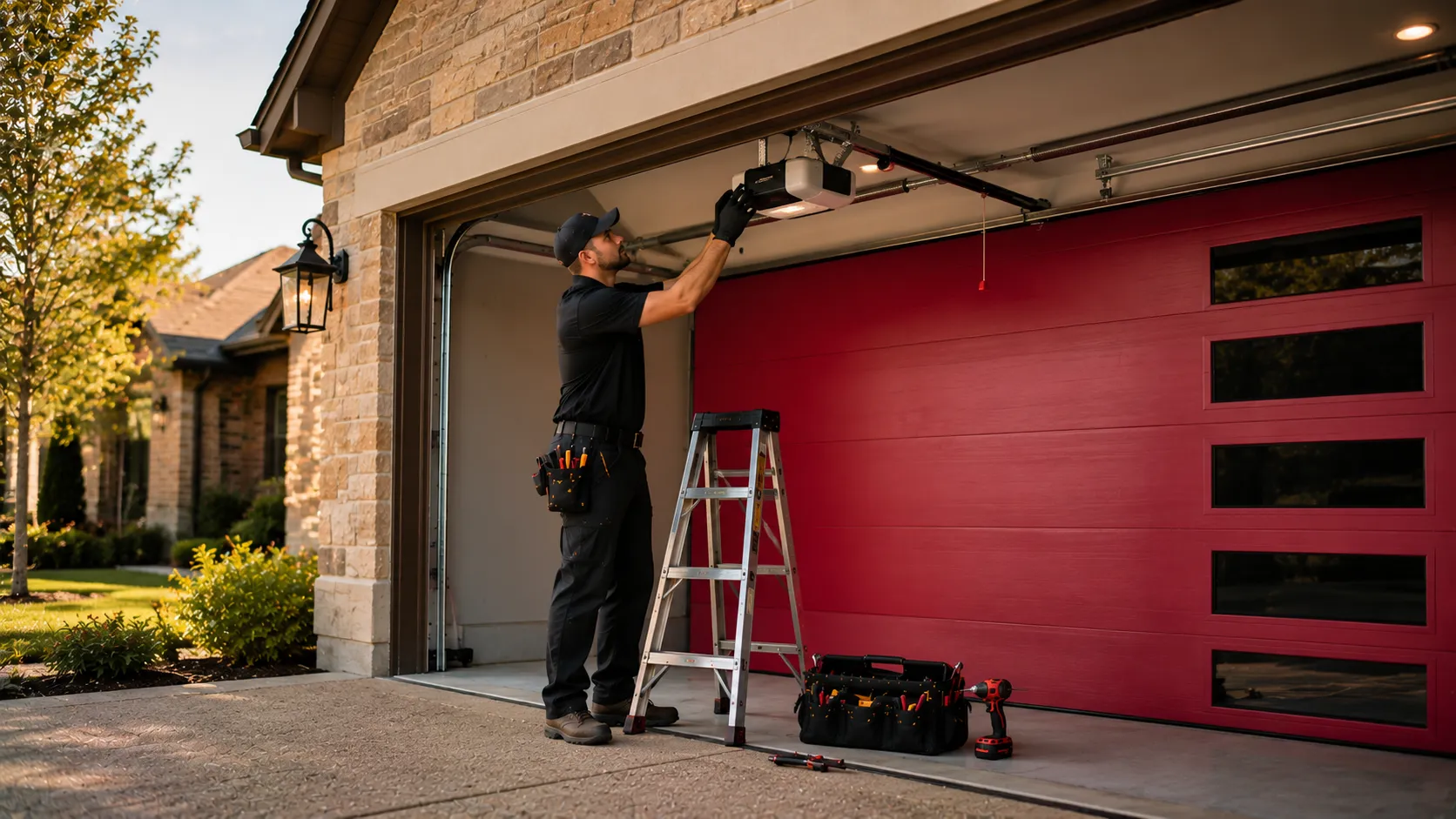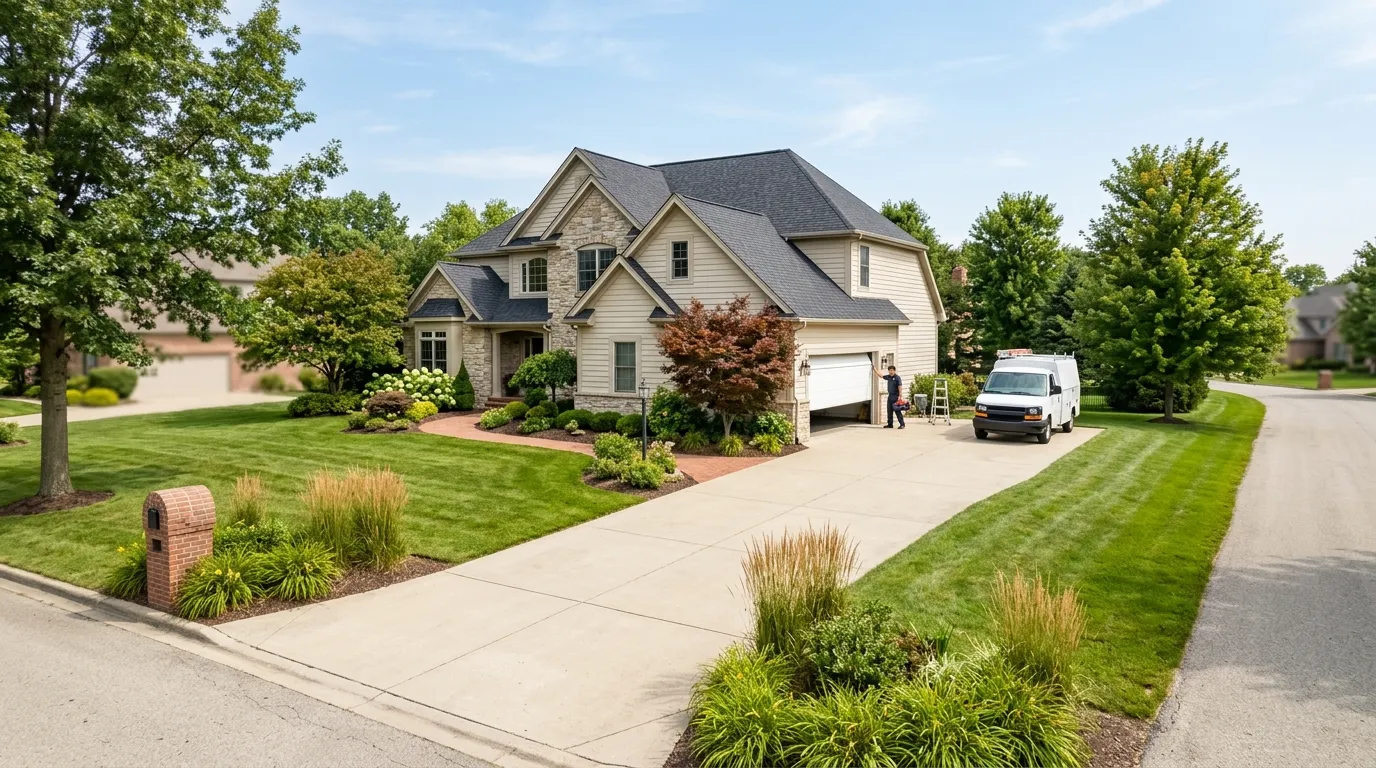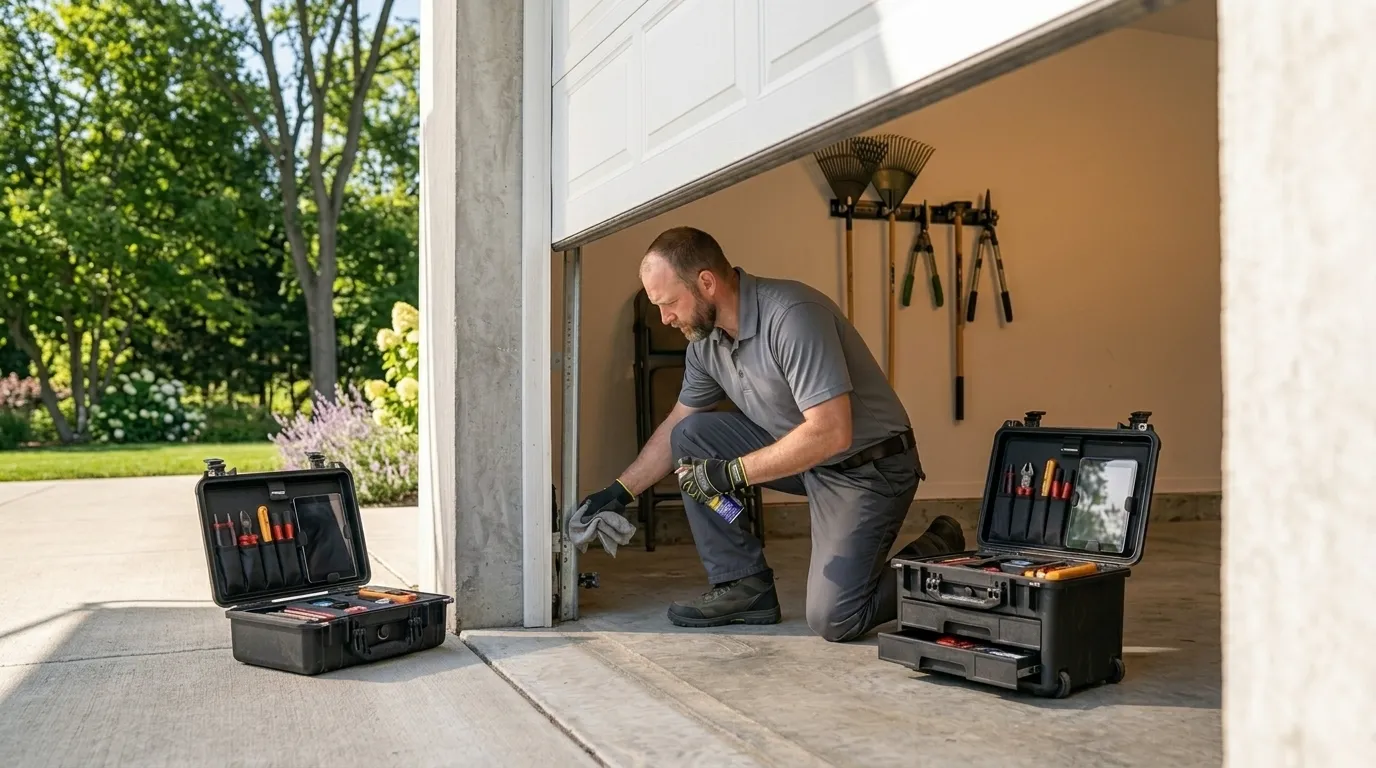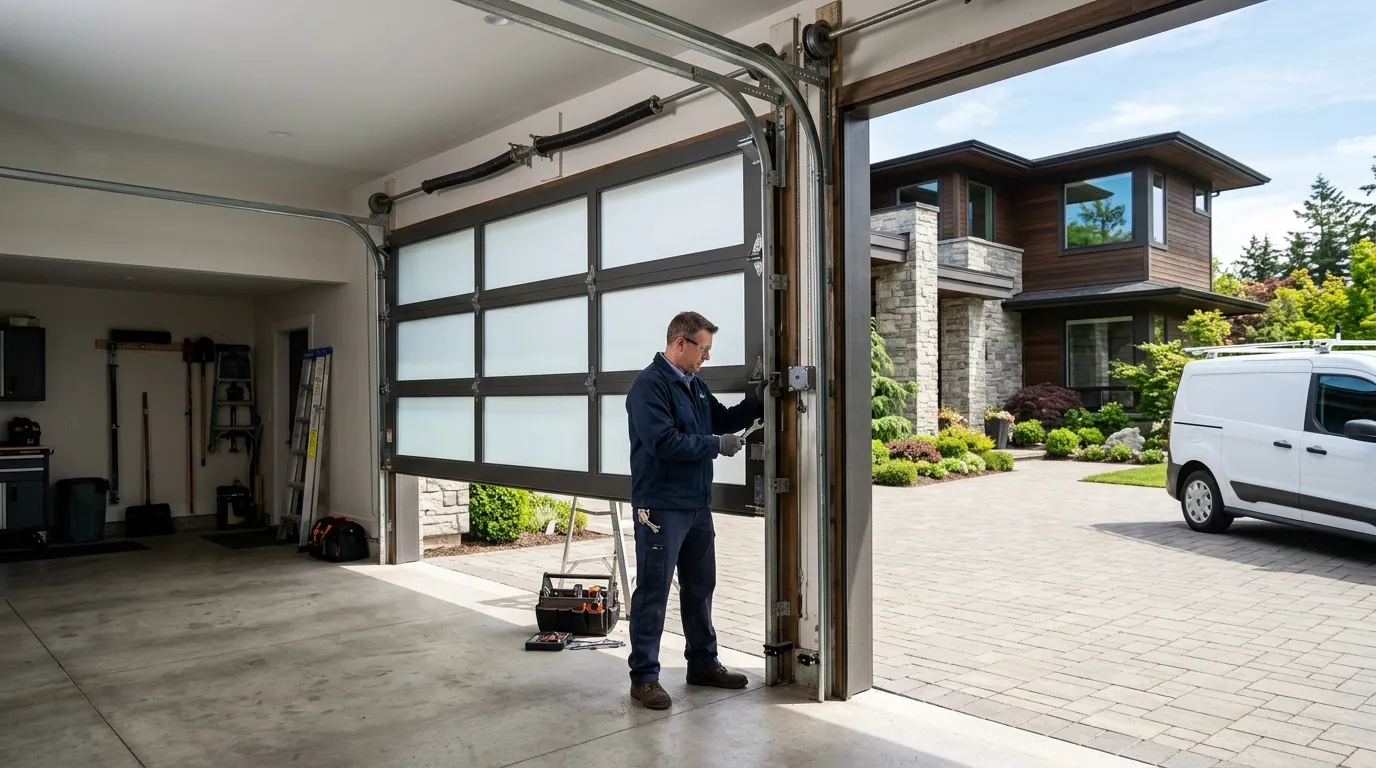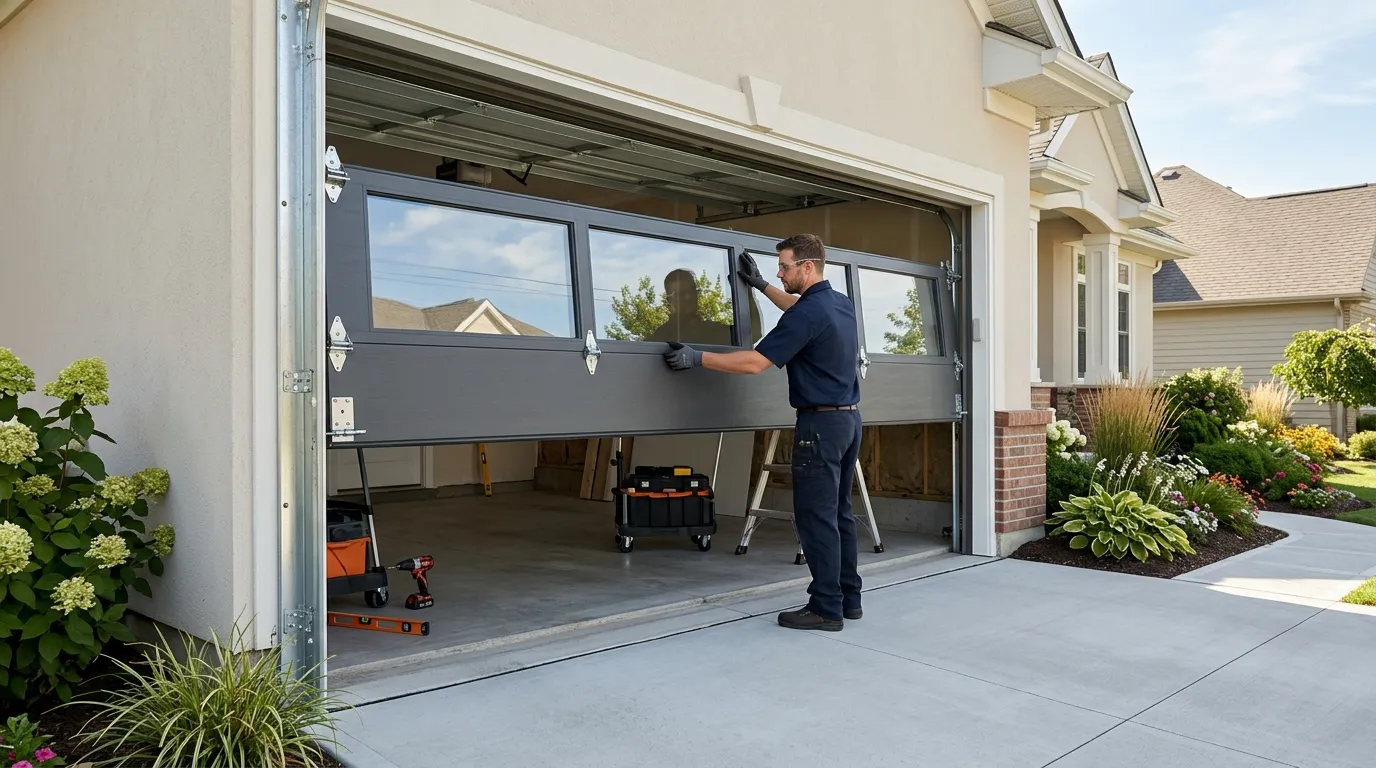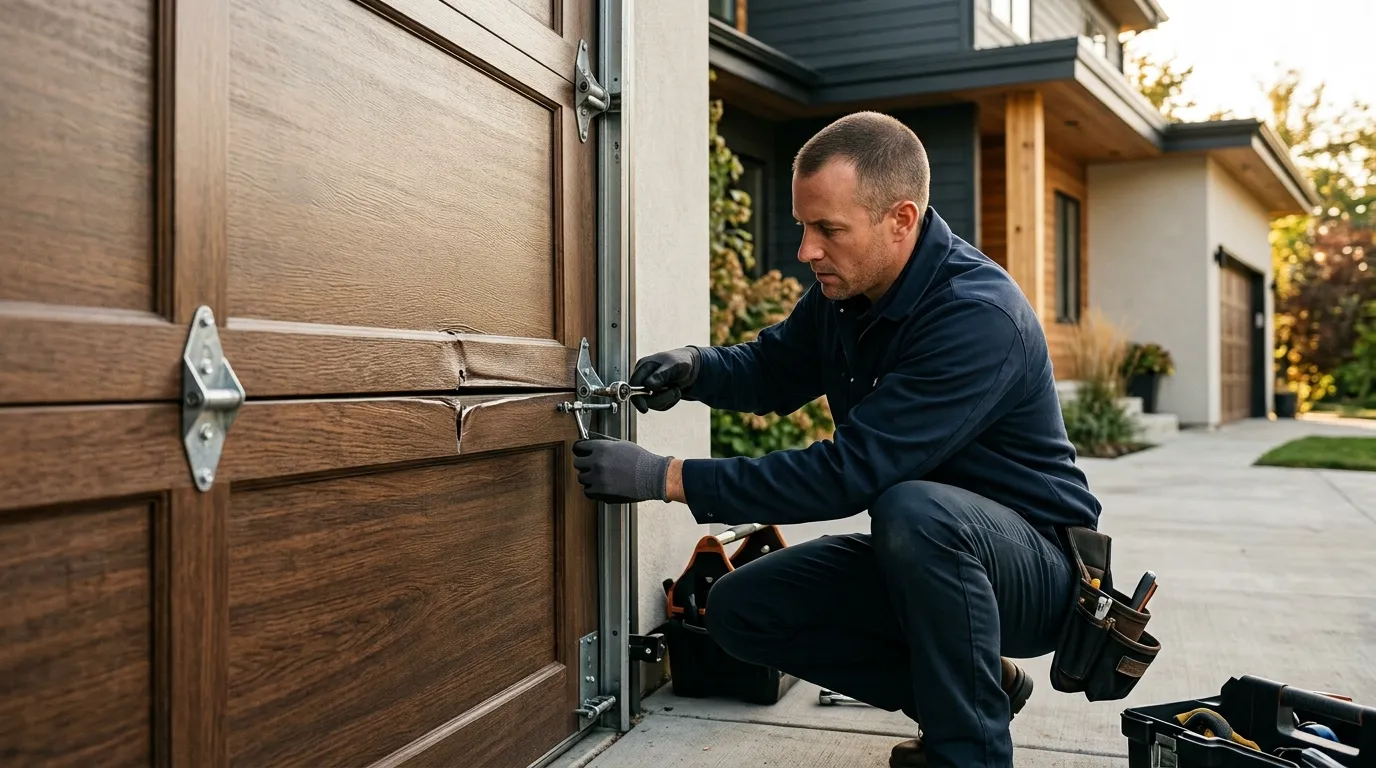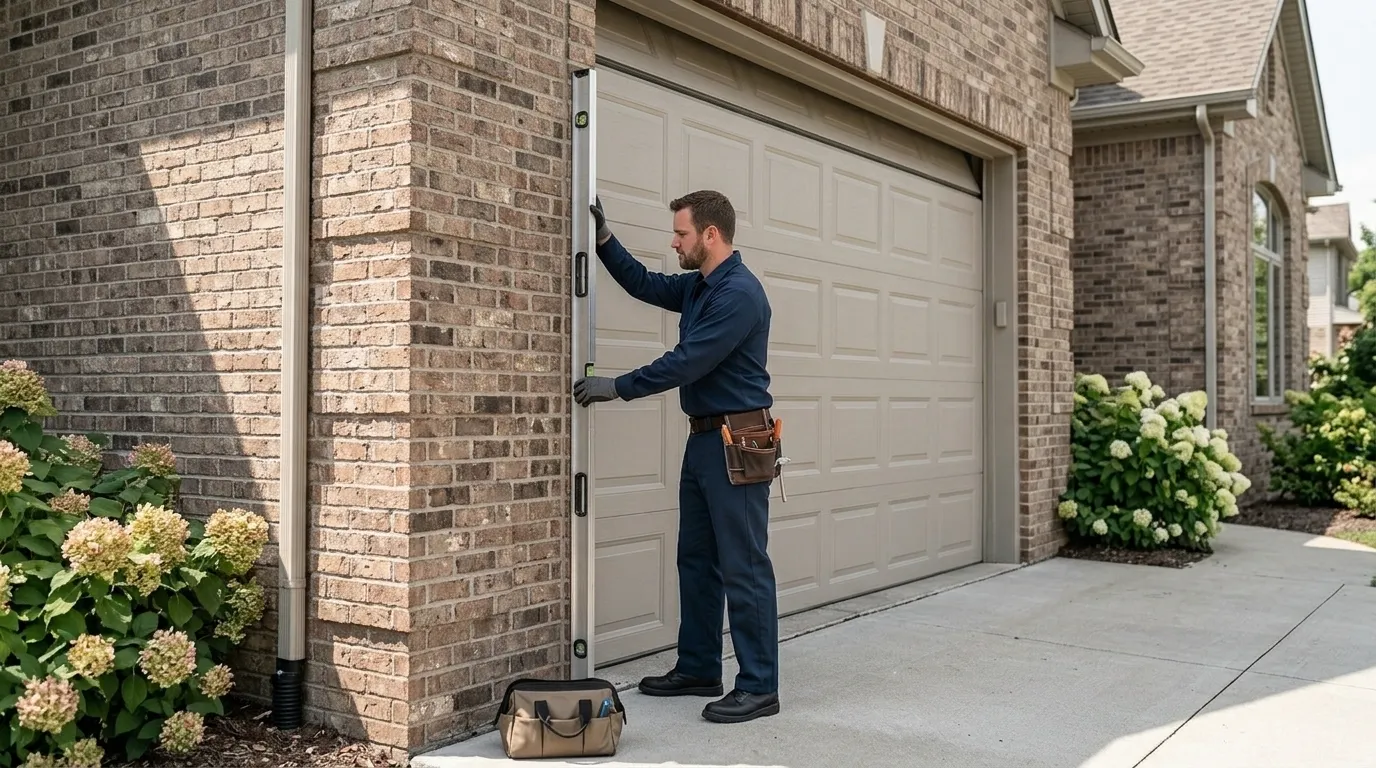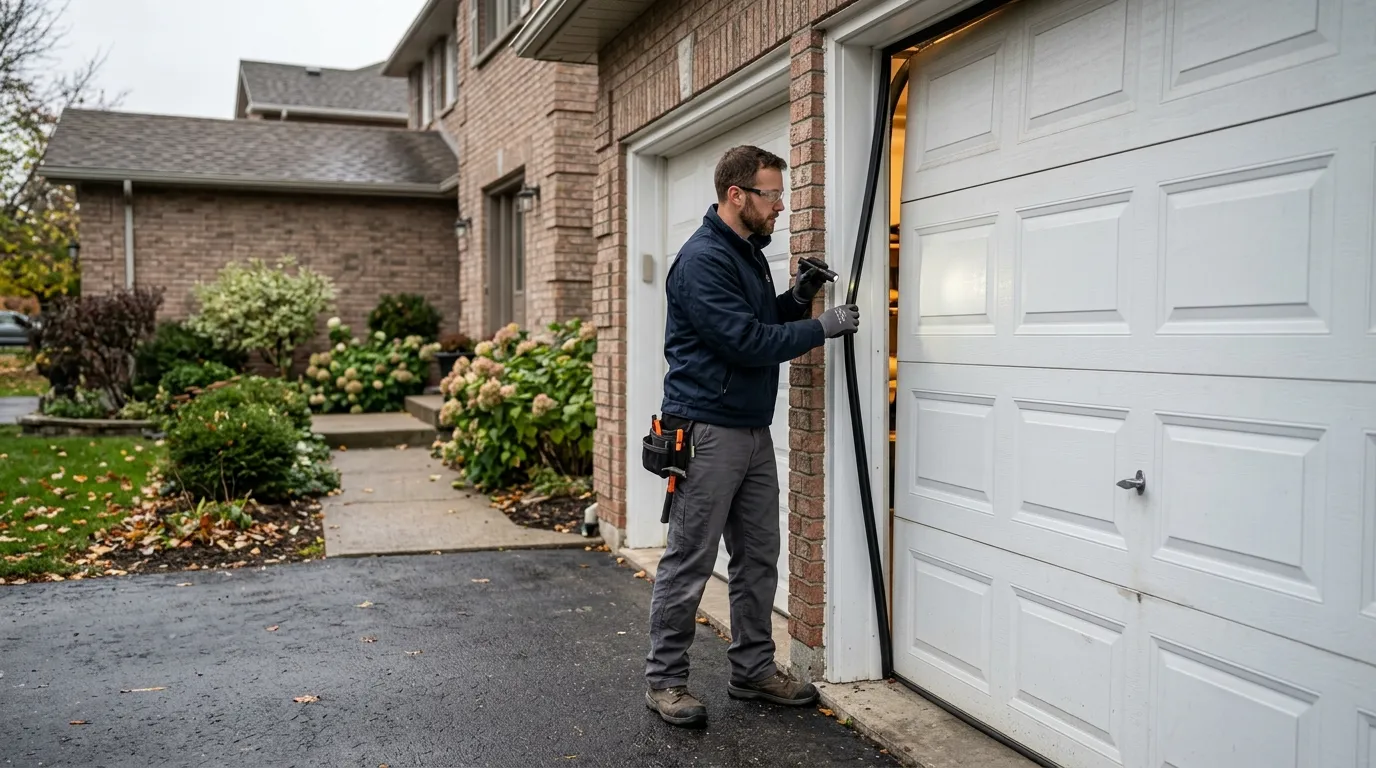
What You Are Seeing
Mineral Wells sits eighteen miles out from Weatherford, the farthest named stop on our coverage map, and that distance shapes how a roller call here actually runs. We're not driving past on the way to somewhere else - a trip out here is its own trip, so when we book a roller job we look hard at whether anything else on the door needs attention while the truck is already parked in your driveway.
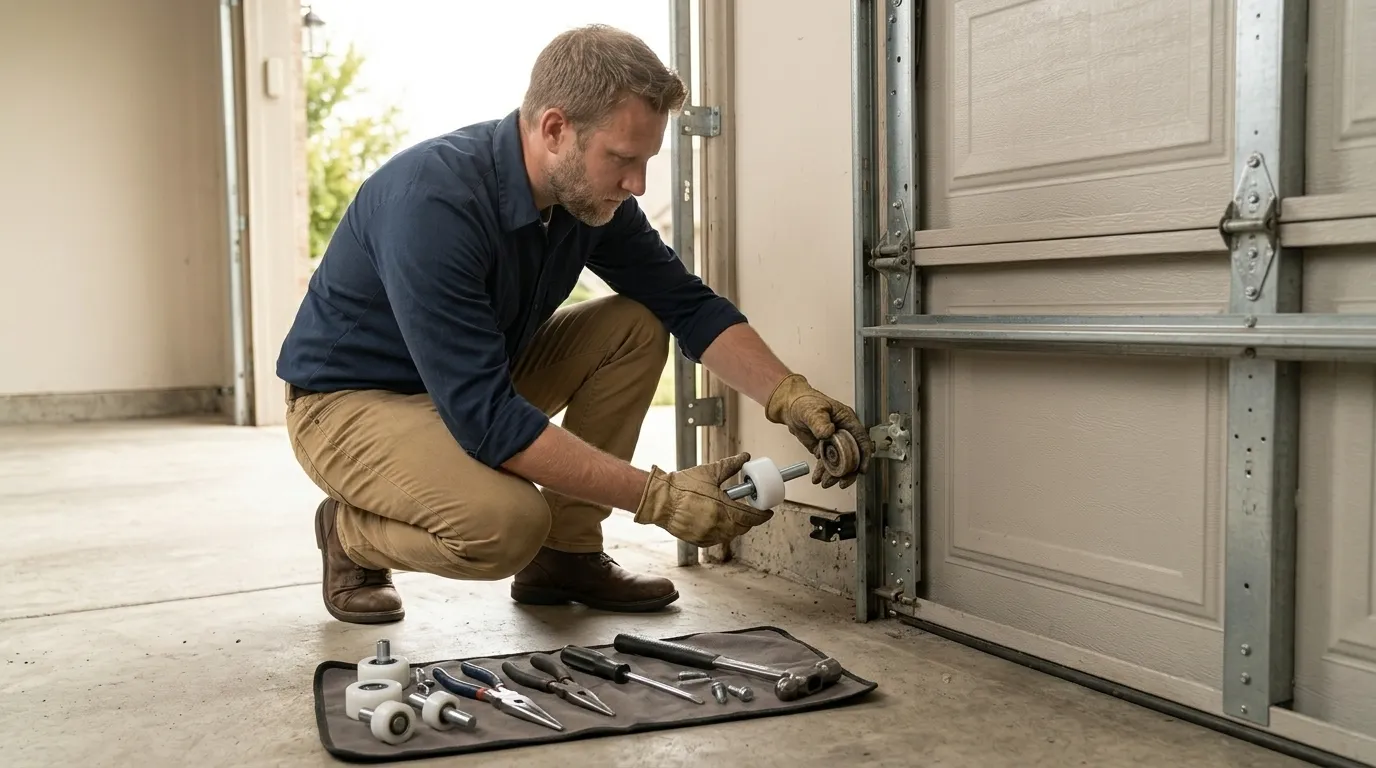
What you're usually hearing is a grinding or knocking sound as the door travels, sometimes worse in the first few feet off the floor. That's a roller that's worn its bearing race down, or a track that's gone slightly out of true from years of a rough roller riding in it. If the door hesitates and jerks at the same spot every time, that's almost always a roller and not the opener - the opener just gets blamed because it's the thing making noise when it strains against the drag.
On older doors especially, a bad roller doesn't fail alone for long. It chews the track, and a chewed track chews the next roller you put in it if nobody addresses the wear pattern first.
What Causes It Around Here
Most houses in Mineral Wells went up around 1966, a full generation ahead of the 1990 median for the rest of the service area we cover out of Weatherford. That matters for rollers specifically: doors from this era were built for steel rollers on steel track, often without nylon or sealed bearings at all, and thirty-some years of unlubricated steel-on-steel contact does exactly what you'd expect - it grooves the track and flattens the roller wheel on one side.
Heat plays into it too. This area sits in a moderate-heat climate band, and repeated summer expansion followed by winter contraction works on the track brackets over decades, loosening the fasteners that hold the track true. A slightly bowed track will eat a roller fast no matter how good the roller is.
We also see a lot of doors here that were re-rollered once already, sometime in the '90s or 2000s, with whatever nylon roller was cheapest at the time. Those plastic rollers hold up fine for a while, then the tires crack in the heat and start throwing chips. That's a different failure than the original steel roller wearing down, but it looks almost identical from the driveway.
Getting It Booked In
Because the trip out here runs eighteen miles each way, we bundle roller work with anything else the door needs so one drive covers it. When you call, tell us what you're hearing and whether it's one roller or the whole set acting up - that helps us load the right stock before we leave Weatherford instead of finding out on your driveway that we're short a part.
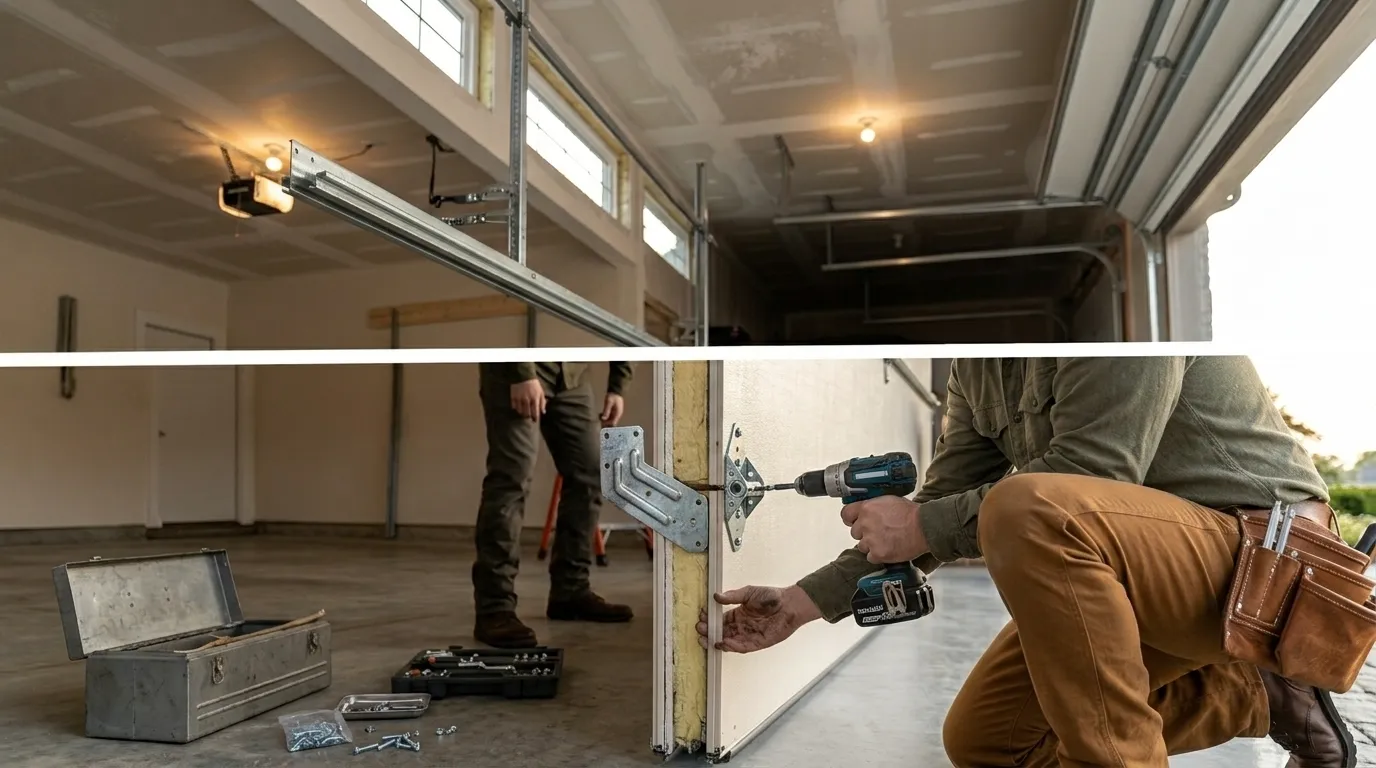
Most roller jobs here are same-visit work once we're on-site: pull the old rollers, check the track for grooving, set new rollers, and run the door through a full cycle to listen for anything else. If the track needs straightening or replacing, that's a longer job and we'll say so up front rather than start something we can't finish that trip.
The Cost of This Job
At a median household income of $54,210 here, roller replacement decisions in Mineral Wells often come down to per-roller cost rather than a full-set replacement people in higher-income parts of the service area might choose without much thought - areas averaging closer to $85,625 tend to opt for the full set on the first visit more often. Both approaches are reasonable. Replacing just the worn rollers costs less up front; replacing the full set means the new and old rollers wear evenly instead of one side aging faster than the other.
We don't have a fixed price to quote you here since it depends on roller count, whether the track needs work, and whether it's a single or double door. What we can tell you honestly: if more than half the rollers on a door are original steel and one has already failed, replacing just that one is a short-term fix. The rest are close behind it.