Stocked Parts
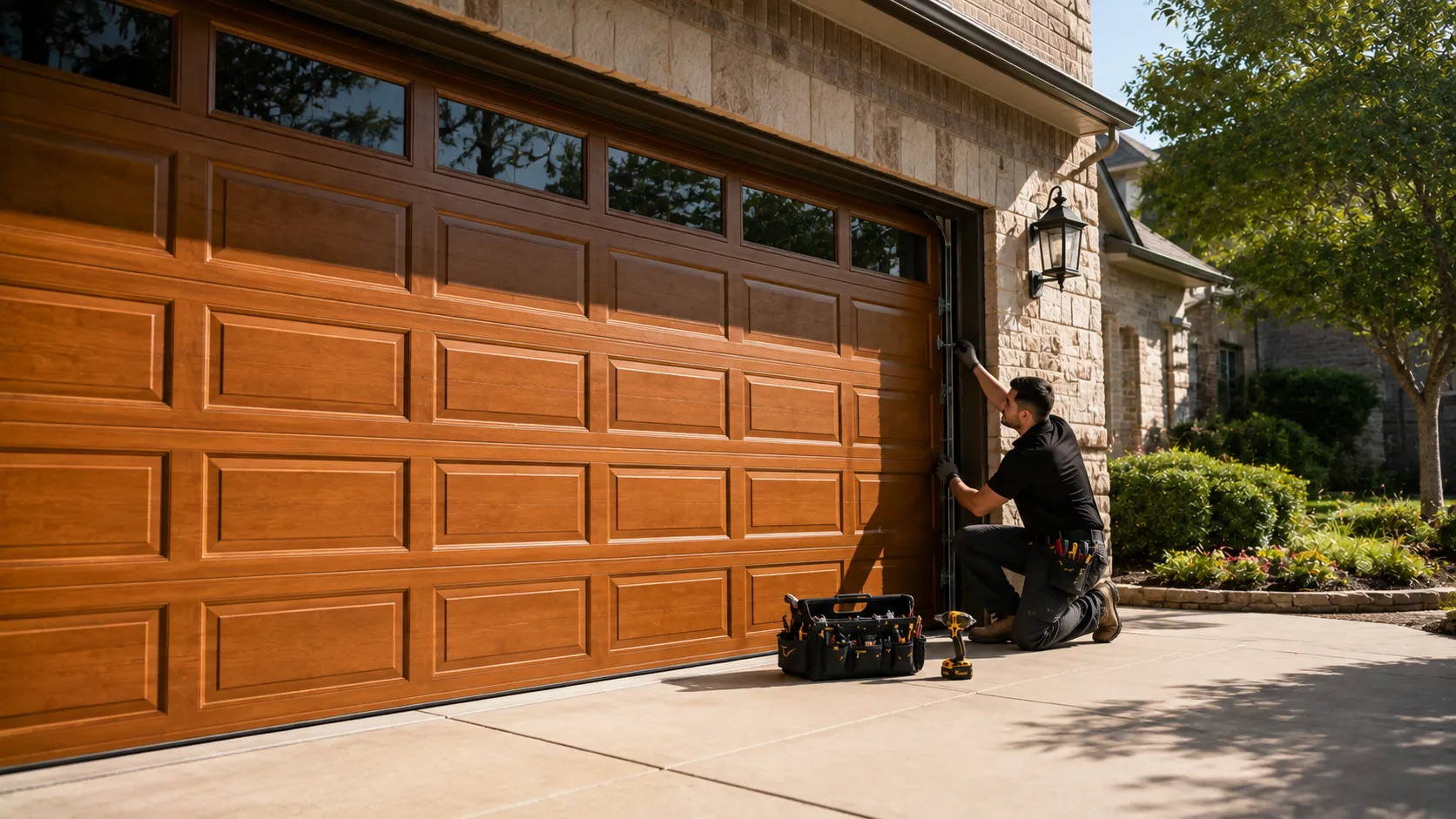
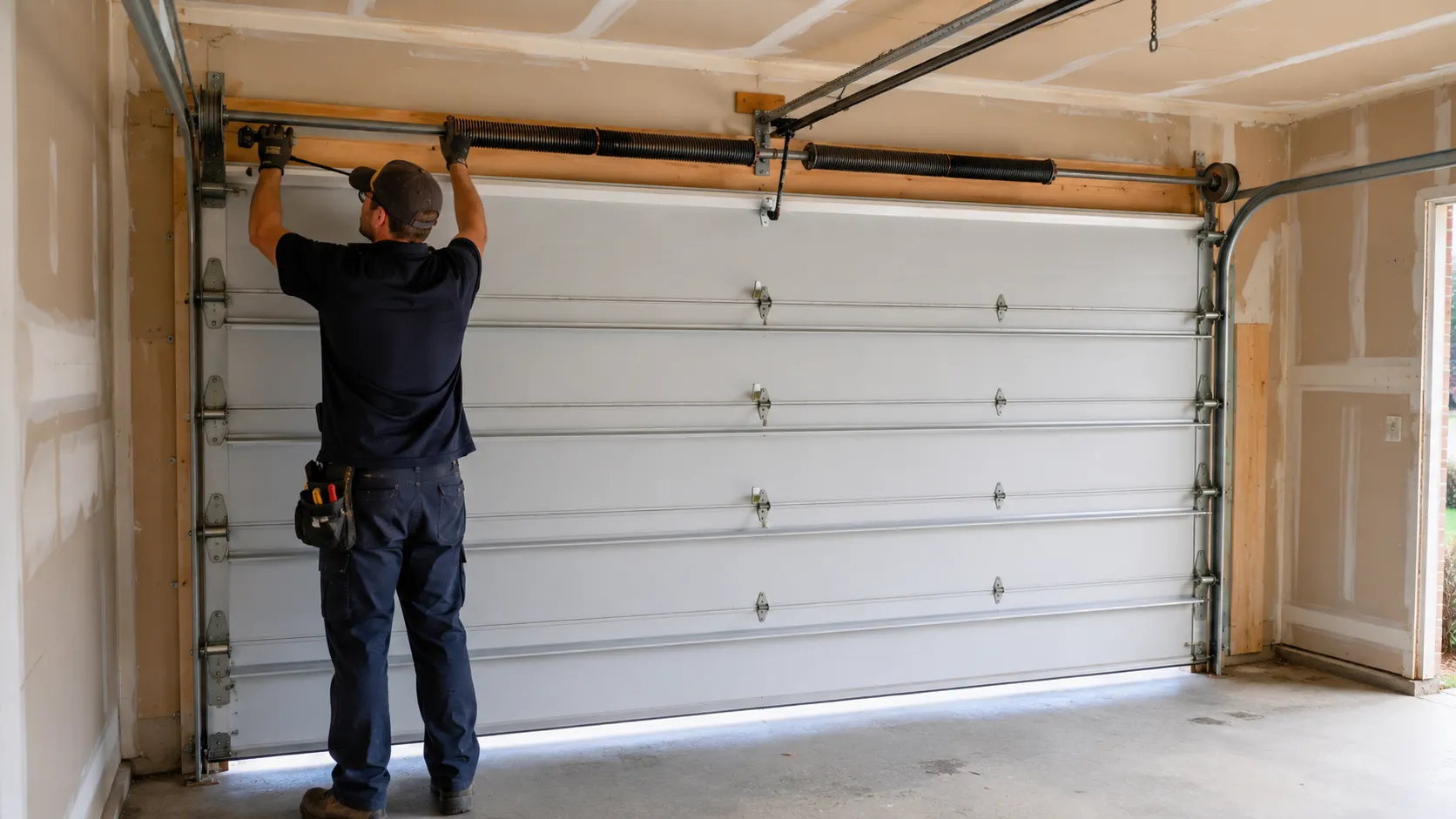
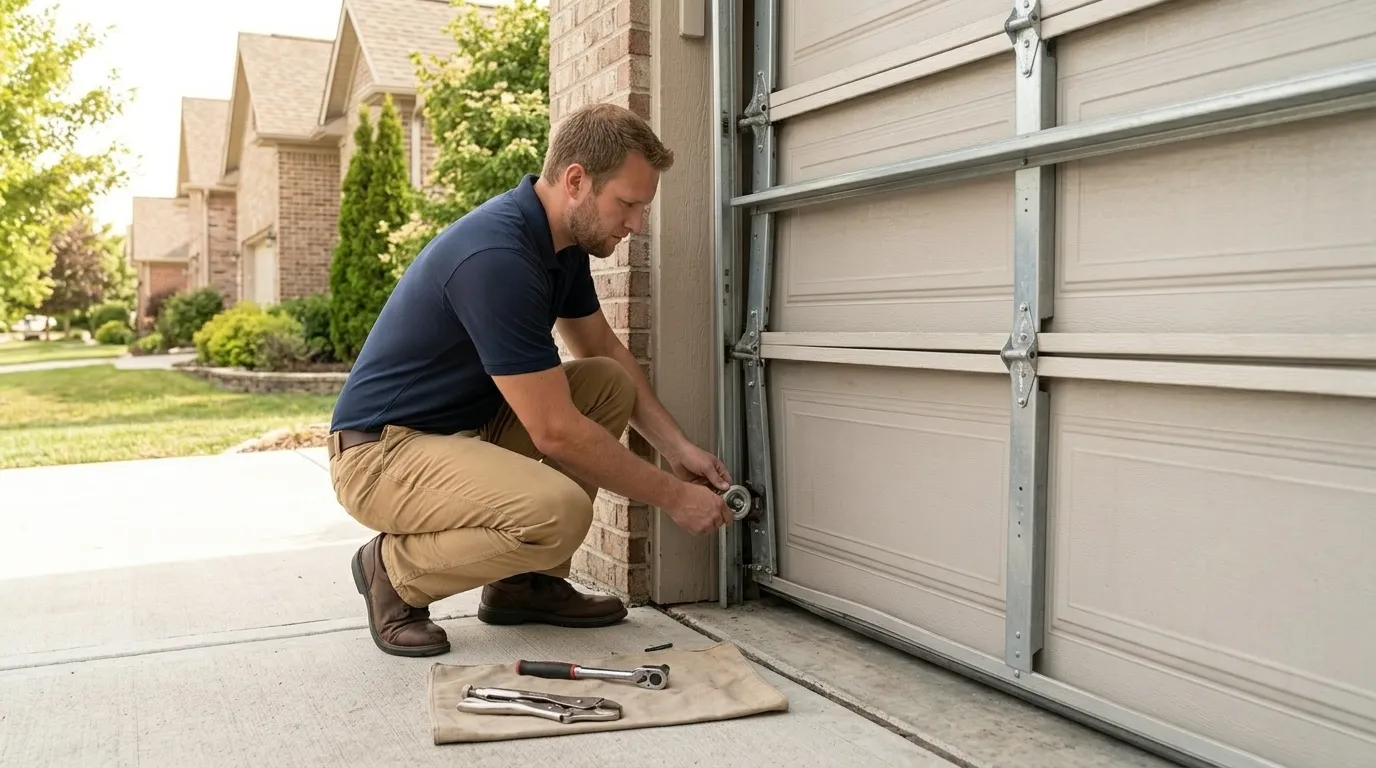
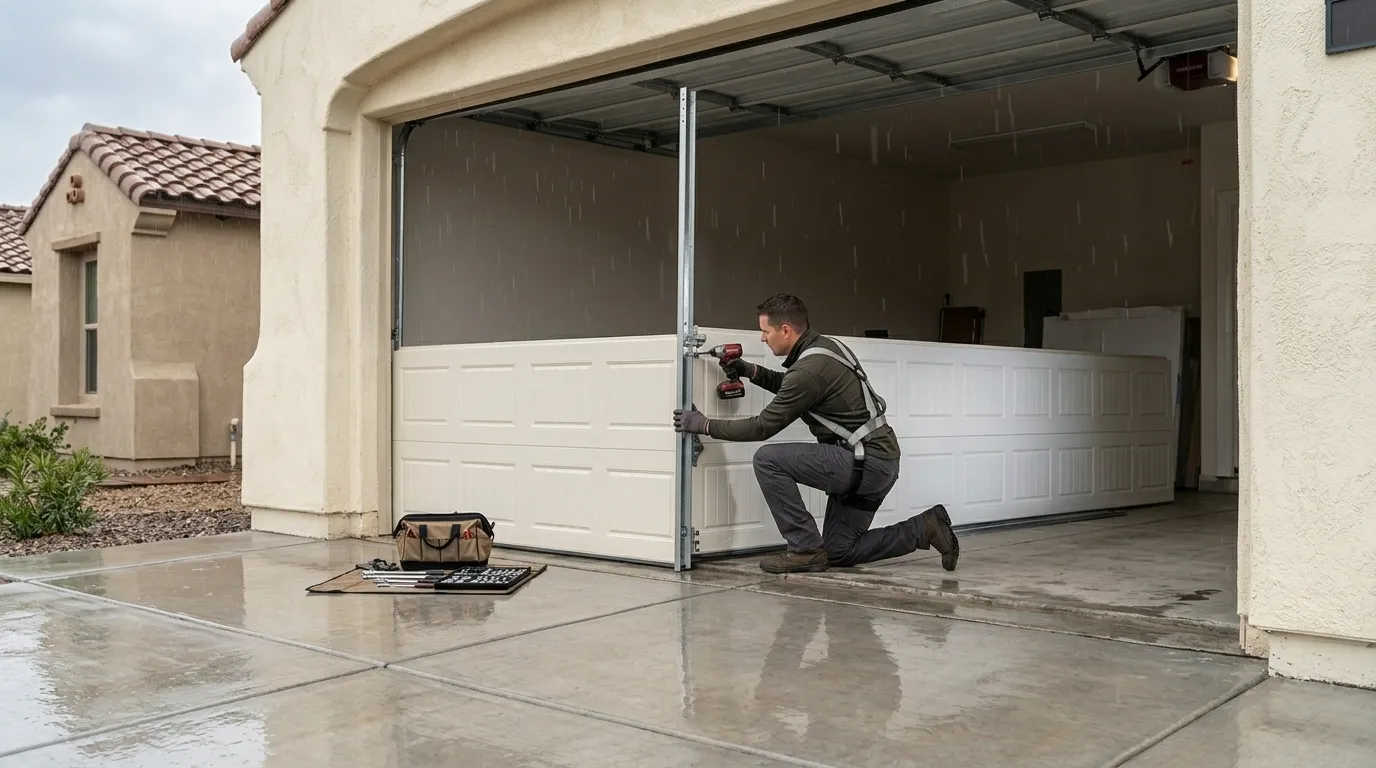
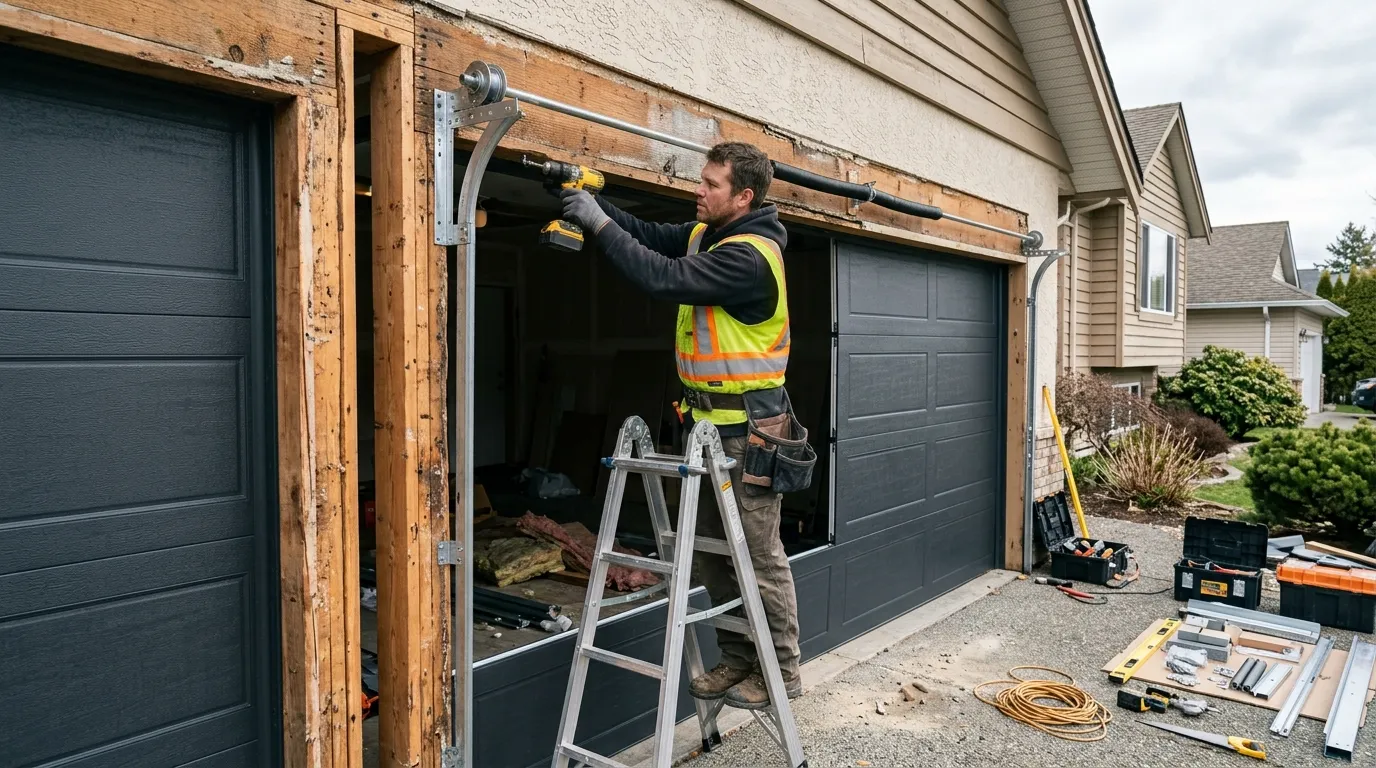
A door put up around 1984 in Oak Trail Shores is almost always a steel raised-panel door, single layer, no foam core, running on extension springs mounted along the horizontal track rather than a torsion bar over the header. That's the standard build for the era across this stretch of the county, and it's a different animal from the torsion setups on newer builds elsewhere in the wider Weatherford service area, where the housing stock skews to 1990 and later. We carry extension spring pairs sized for that generation of door, the stamped steel hinges that crack at the second and third panel first, and the nylon rollers that replace the original steel ones without needing to touch the track alignment. What we don't keep on the truck is anything custom-milled - if a panel's discontinued from a defunct manufacturer, that's a special order, and we say so up front instead of promising a same-day fix we can't deliver.
Most of what fails on these doors is predictable once you know the build year: the spring cable, the hinge, or the roller. We stock those. What we don't guess at is the size of your opening - that gets measured on site before anything gets ordered.
The Complications
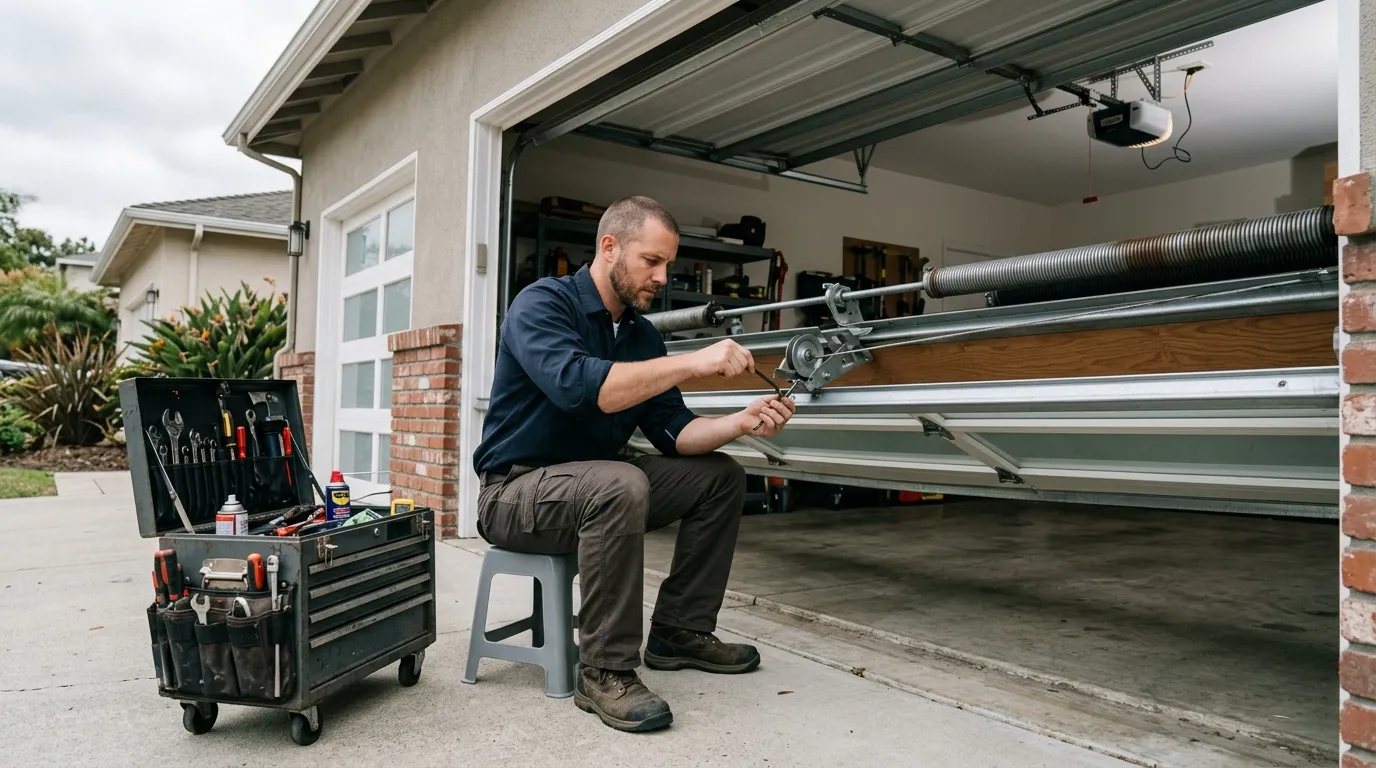
Extension spring systems from the 1980s don't fail the way a modern torsion spring does. There's no cone to slip, but there is a stretched spring under load that can whip the safety cable loose if the cable's rusted through, which happens more here than on newer torsion setups because the spring sits exposed along the track instead of sealed over a shaft. On a household budget like the one common in Oak Trail Shores - median income here runs well under the wider service area's $85,625 - a full torsion conversion is sometimes the right call but rarely the first one we suggest, because it's the more expensive fix and not always the necessary one.
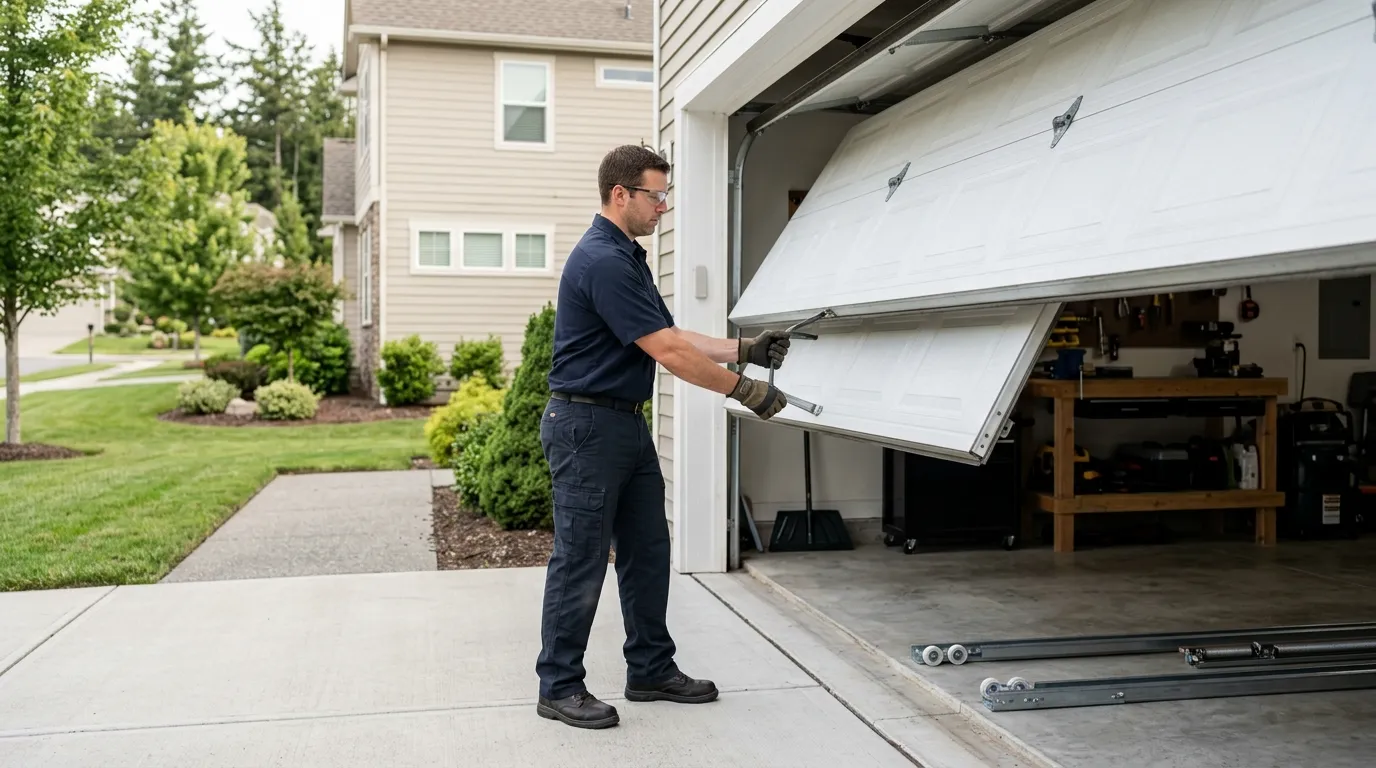
The other complication is simply age of the door itself, not just the springs. A steel panel from 1984 that's been dented or rusted through at the bottom section usually can't be color-matched or ordered as a single replacement panel anymore, so a section repair sometimes turns into a conversation about the whole door. We'll tell you which one it is before we start work, not after.
The Cost of This Job
We don't publish flat prices here because spring weight, door size, and how many hardware pieces are failing all move the number, and quoting a price without seeing the door does nobody any favors. What we can say is that an extension spring and cable repair on a door this age is a smaller job than a torsion conversion or a full door replacement, and for a lot of houses in Oak Trail Shores, keeping the original steel door running another decade with new springs, hinges, and rollers is the cheaper and more sensible path than swapping the whole unit.
What You Are Seeing
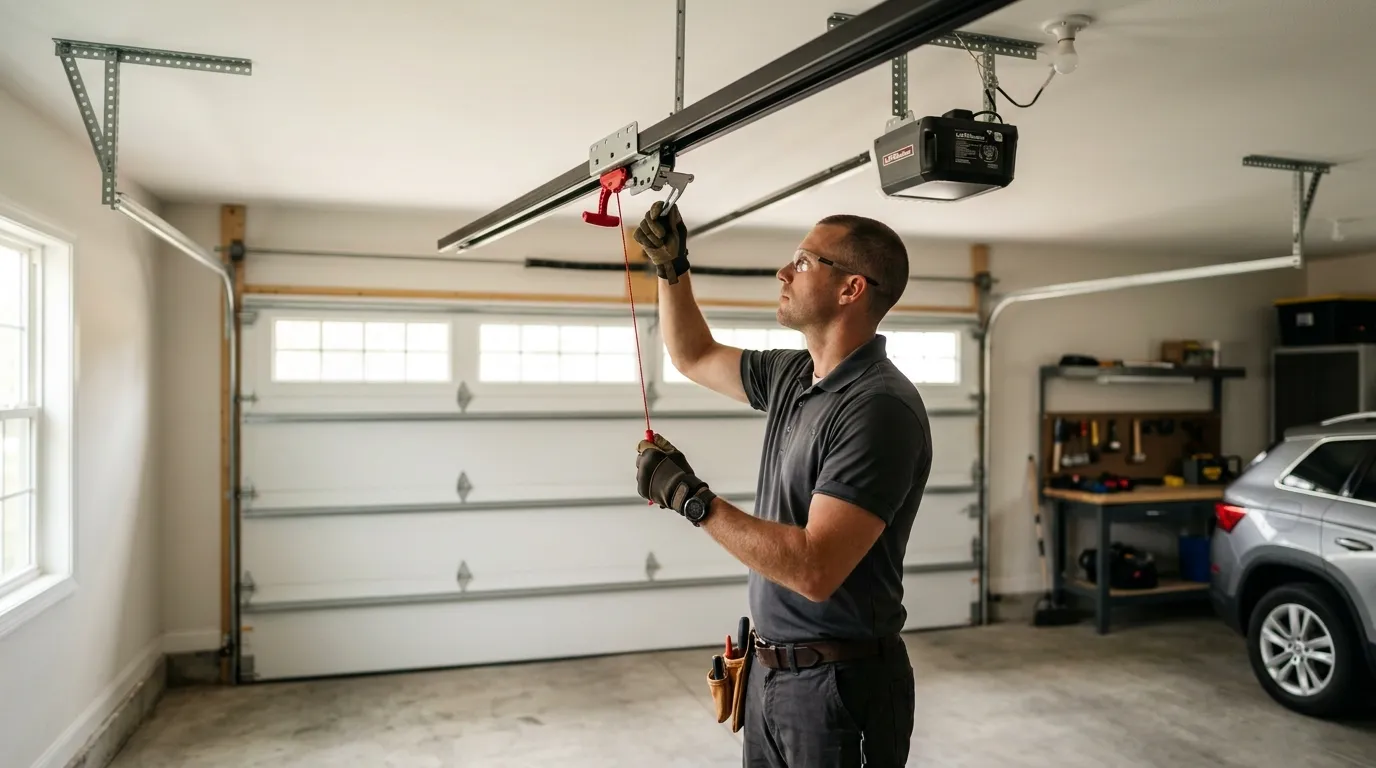
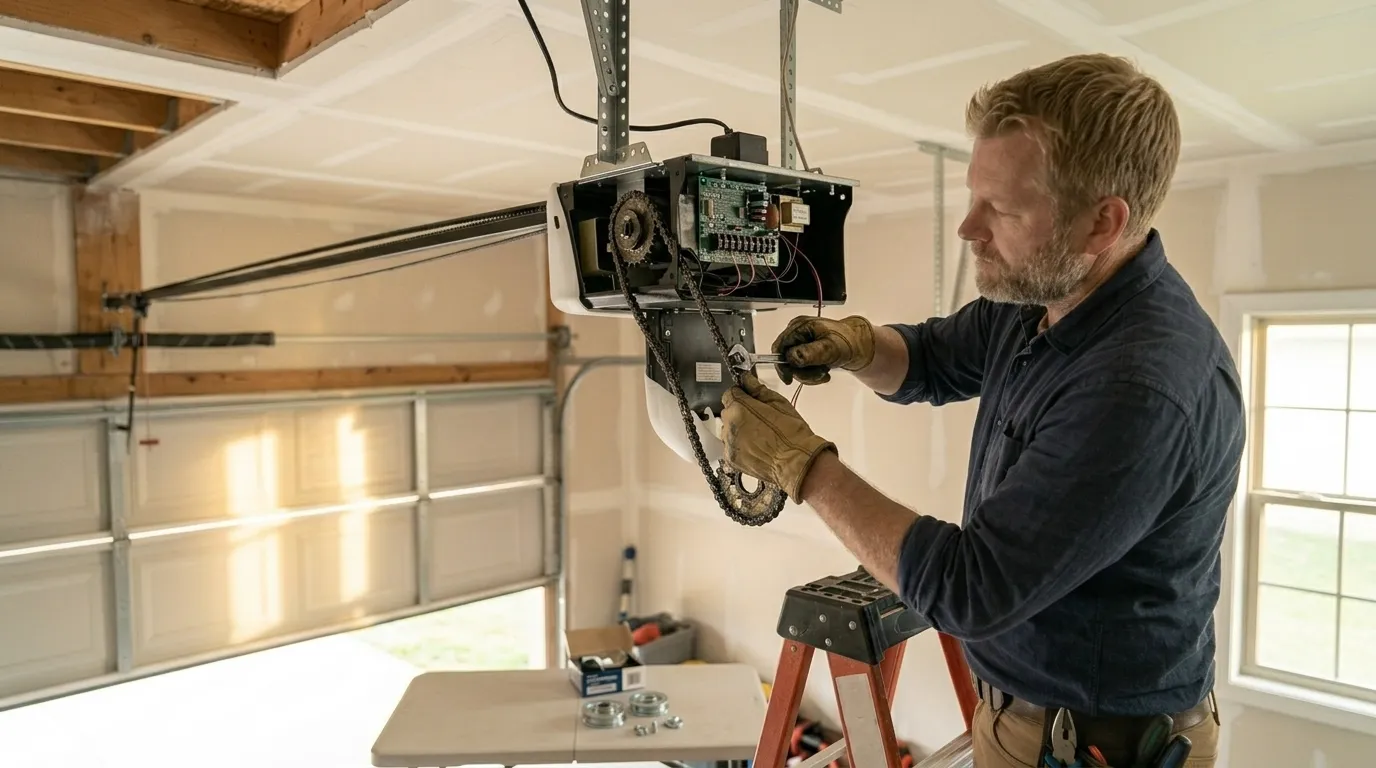
If the door slams the last foot instead of settling, or one side drops faster than the other when you pull the release cord, that's usually a stretched or snapped extension spring - common on doors built around 1984 because the original springs have had close to forty years of cycles. A door that shudders or binds partway up often means a rusted track bracket rather than the opener itself. And if you hear a metallic snap followed by the door refusing to budge, that's very likely the safety cable doing its job after a spring failed, not a sign the opener motor burned out. None of this is dangerous to look at from a distance, but we'd rather you call before trying to force the door up by hand.