
Stocked Parts
Weatherford's service area runs 1966 through 2010 with a median build year of 1990, but Oak Trail Shores sits older than that average at 1984. That six-year gap matters more than it sounds. Doors put up in the early-to-mid 80s were built for steel rollers on plain bushings, not the sealed ball-bearing nylon rollers that became standard closer to 1990. When a homeowner here calls about a door that grinds or hops on the way up, we're usually looking at track and roller combinations that predate the more forgiving hardware found on newer builds elsewhere in the coverage area.
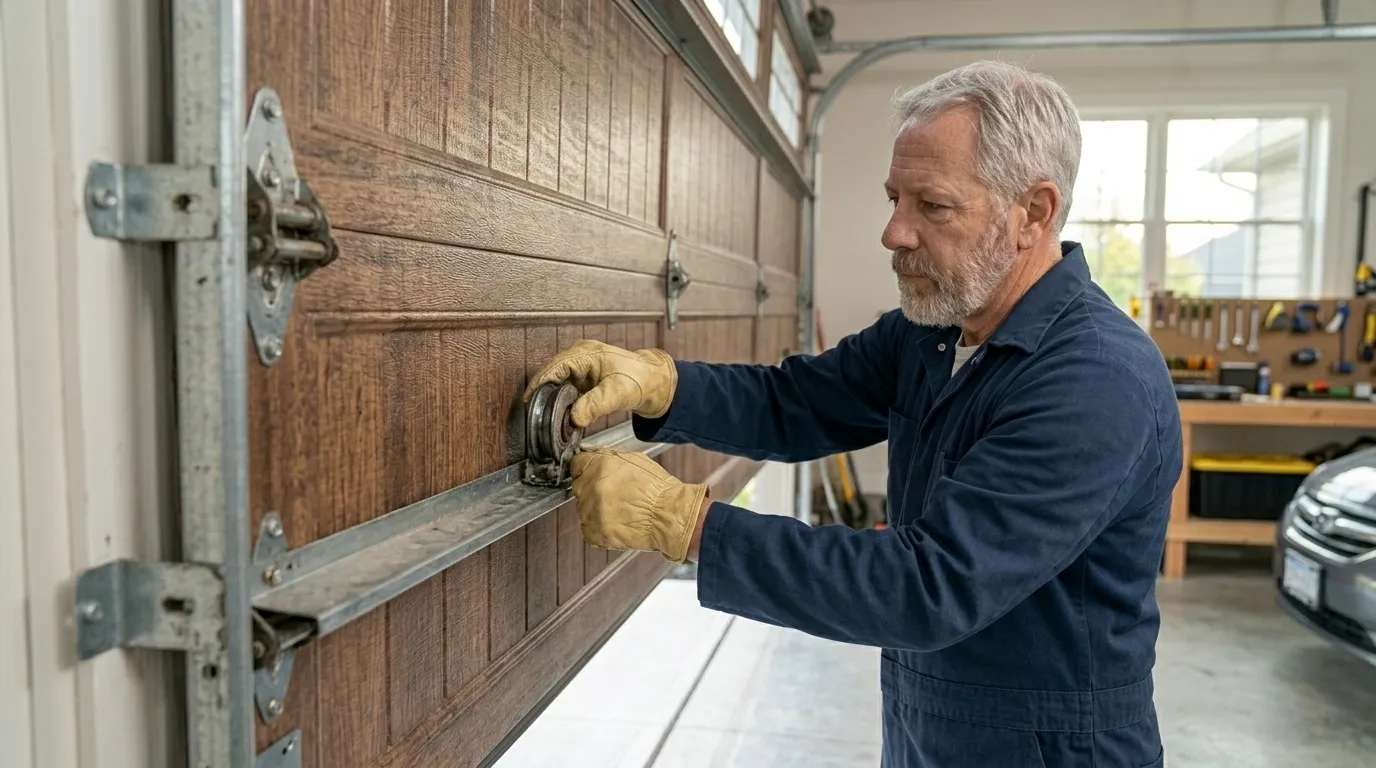
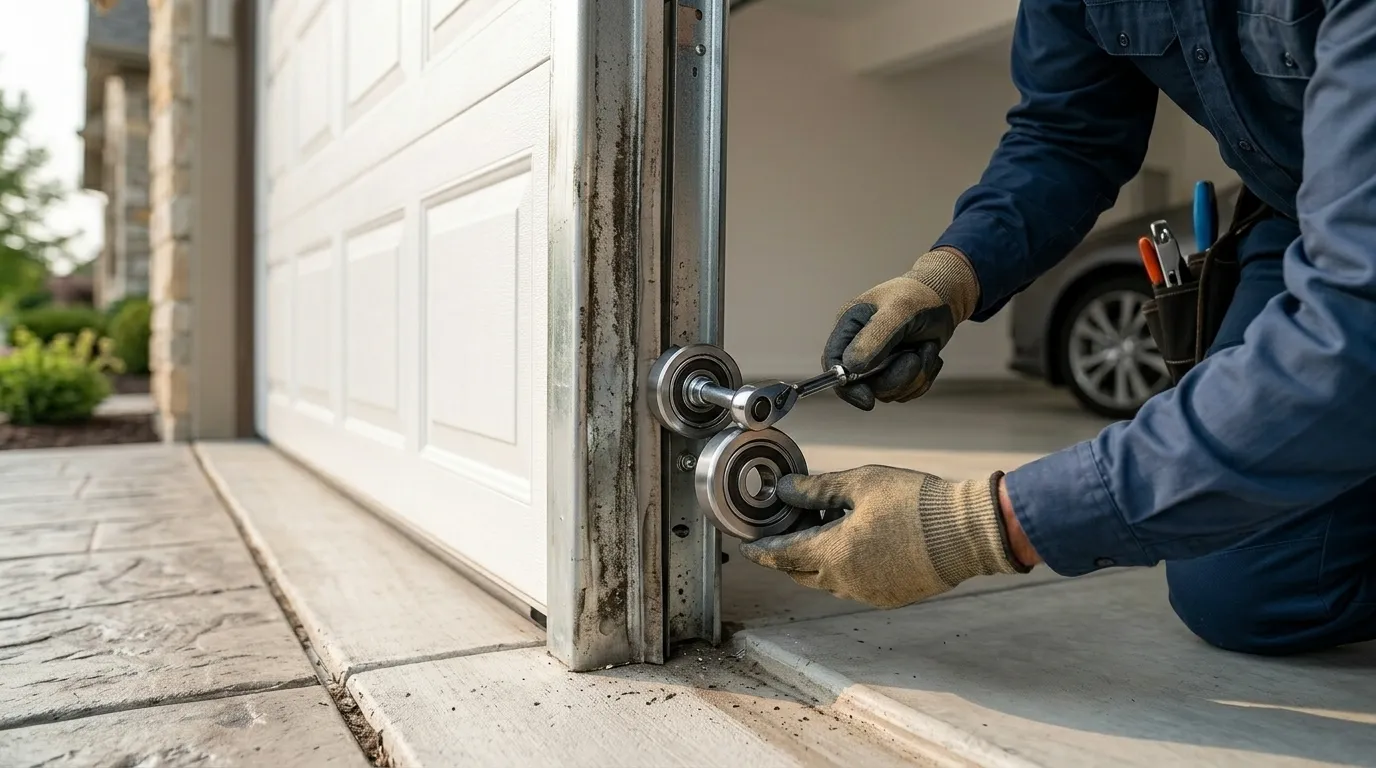
We carry both. Standard 7-ball nylon rollers cover most of what we see, but a fair number of Oak Trail Shores doors still run on stem lengths and bracket spacing that match older track profiles, not the 4-inch stems common on newer installs. We check the stem length and track gauge before we quote, because guessing wrong means a second trip.
What we don't stock is anything specialty-order - if a door has been modified with a non-standard track or a roller size outside common production, that part isn't riding in the truck and we'll say so up front rather than pretend otherwise.
The Complications
A door built around 1984 has usually had at least one prior repair, sometimes done by whoever owned the house before. That means brackets that don't match the original spec, a track that's been re-shimmed, or rollers swapped one at a time instead of as a full set - which throws the door out of balance on one side.
With 1,338 households in this area and a median income of $33,272, well under the $85,625 median across the wider Weatherford service area, we see more doors that have been kept running through partial fixes rather than full roller sets. That's not a criticism - it's a normal, sensible way to manage a repair bill. But it means when we finally do the full set, we often find a bent track or a bracket that's been loosened and retightened more than once, and that gets fixed at the same time or the new rollers won't last.
The moderate heat here doesn't crack nylon rollers the way harsher climates do, but it does dry out the lubricant in track and rollers faster than owners expect, so a roller that looks fine can still be riding rough.
The Cost of This Job
We don't have a fixed number to quote here without seeing the door, and we're not going to invent one. What we can say is that the price on an older Oak Trail Shores door tends to land higher than a like-for-like job on a newer build, because of the extra time spent checking and often correcting track alignment before the new rollers go on.
Given the median income here, we get straight questions about cost, and we try to give straight answers on-site: what's roller wear only, what's roller-plus-track, and what can wait versus what can't. A roller that's simply worn and noisy is a smaller job than one that's shed a ball bearing and chewed into the track - the second one costs more because we're replacing track section, not just rollers.
We'll walk you through what we find before doing anything, and if the job is bigger than a roller swap - say the door itself is failing, not just the hardware - we'll tell you that instead of running up a repair bill on a door that's better replaced.
What You Are Seeing
On a 1984-era door, the classic sign is a rhythmic thump as the door travels, one thump per rotation of a specific roller, which tells us it's a single flat-spotted roller rather than a whole set gone bad. A door that's noisy the entire way up and down, evenly, points more toward dry or worn-out rollers across the board, or track that's simply dirty and needs cleaning before we touch anything.
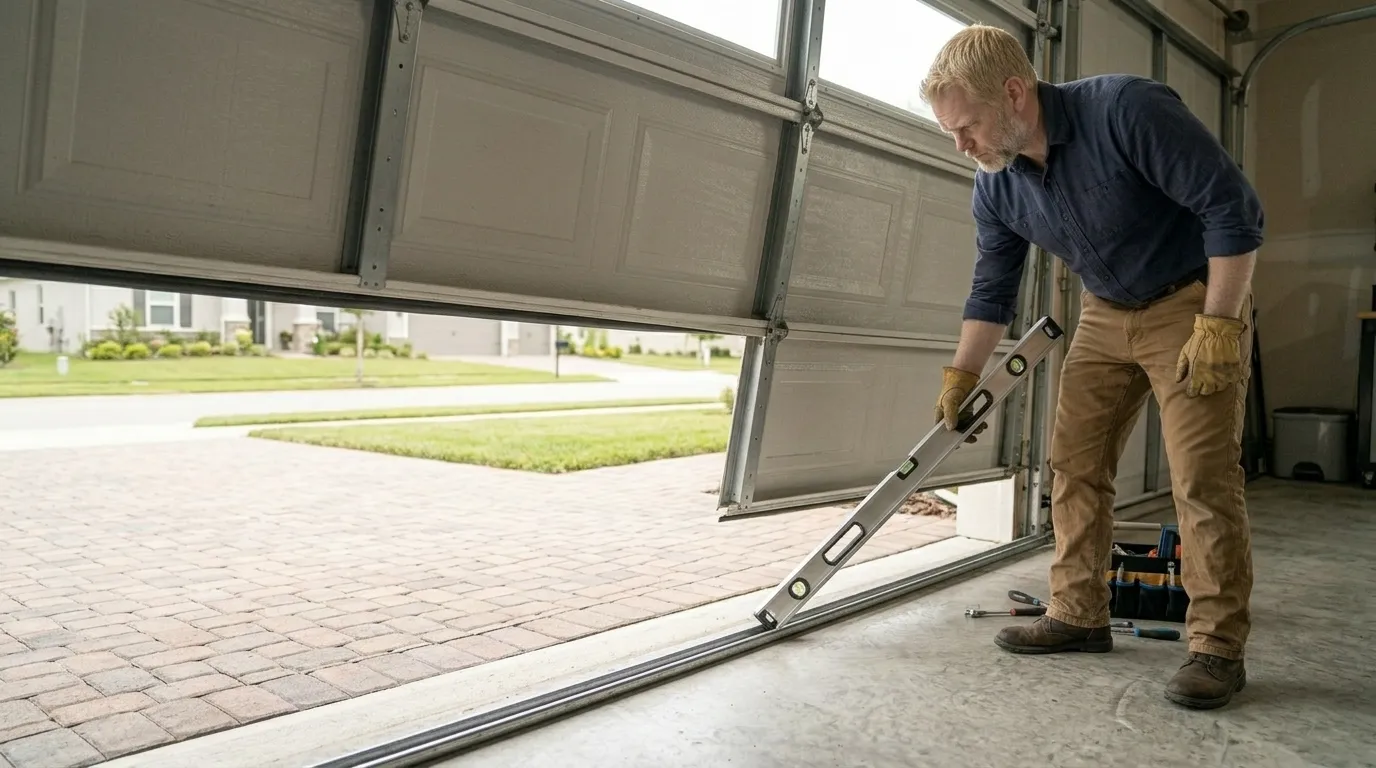
A door that hops or jerks at one specific spot on the track every time is usually a bent section, not the rollers at all - replacing rollers on a bent track just wears the new ones out fast in the same spot. If the door drags heavily to one side, check whether it's rollers or a spring losing tension; they can look similar from the driveway but the fix is completely different.
If your door is under a decade old, this is less likely to be the issue - newer rollers with sealed bearings just don't fail this way as often, which is part of why we ask the build year before we ever guess at the fault.