
What Causes It Around Here
Most houses in Hudson Oaks went up around 2002, well after the older 1966-1990 stock that fills a lot of the rest of the Weatherford service area. That matters for cables because newer construction here almost always came with factory torsion systems and galvanized lift cables on steel drums, not the older extension-spring setups with exposed cable runs down the side of the track. The failure mode is different too. On a 2002-era door, the cable usually doesn't snap outright first - it frays where it wraps the drum, or the drum itself walks off center because a set screw backed out over the years. You'll notice the door pulling crooked on one side before anything actually breaks. That's a warning most owners here miss, because the rest of the door still looks fine. Rust isn't much of a factor given the moderate heat band this area sits in, so when a cable does go, it's almost always wear at the drum, not corrosion eating through the strand. Worth knowing before you assume it's a spring problem.
What the Repair Takes
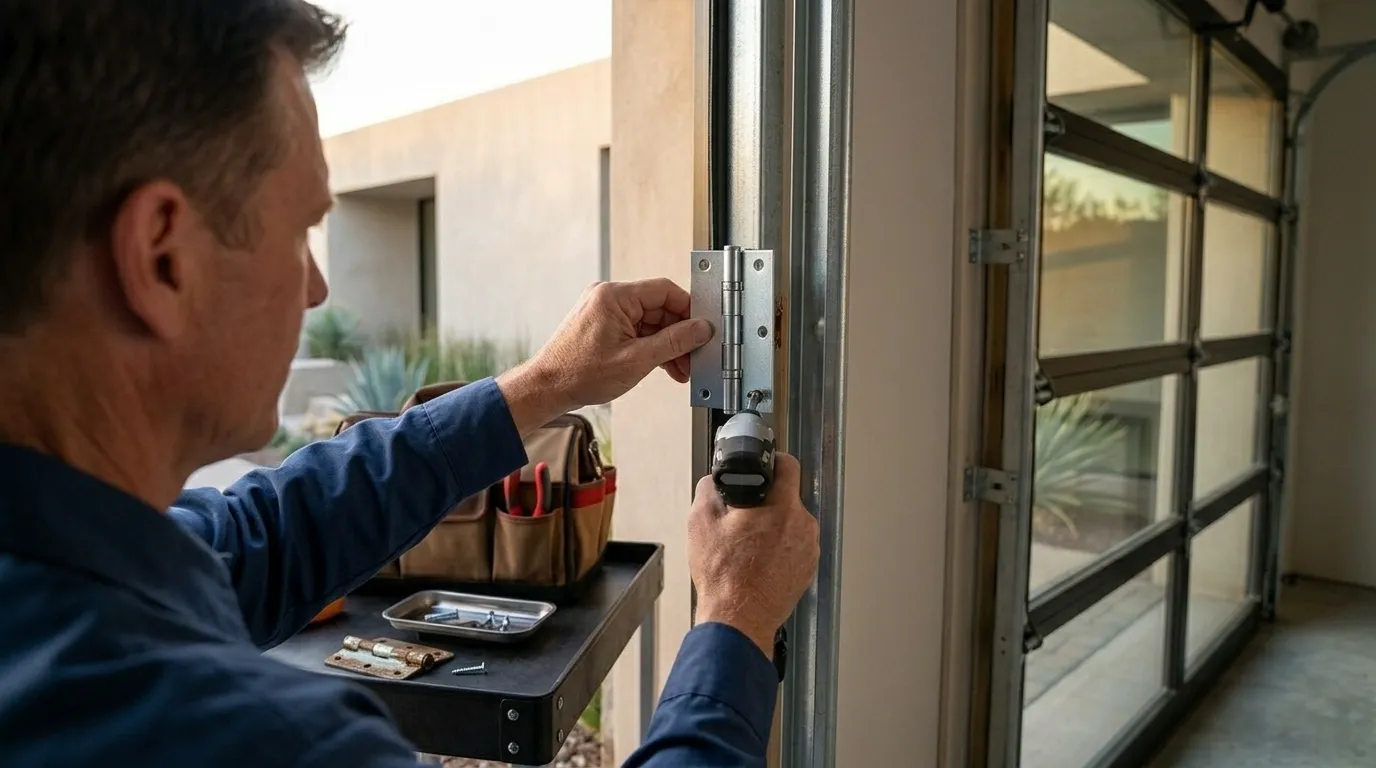
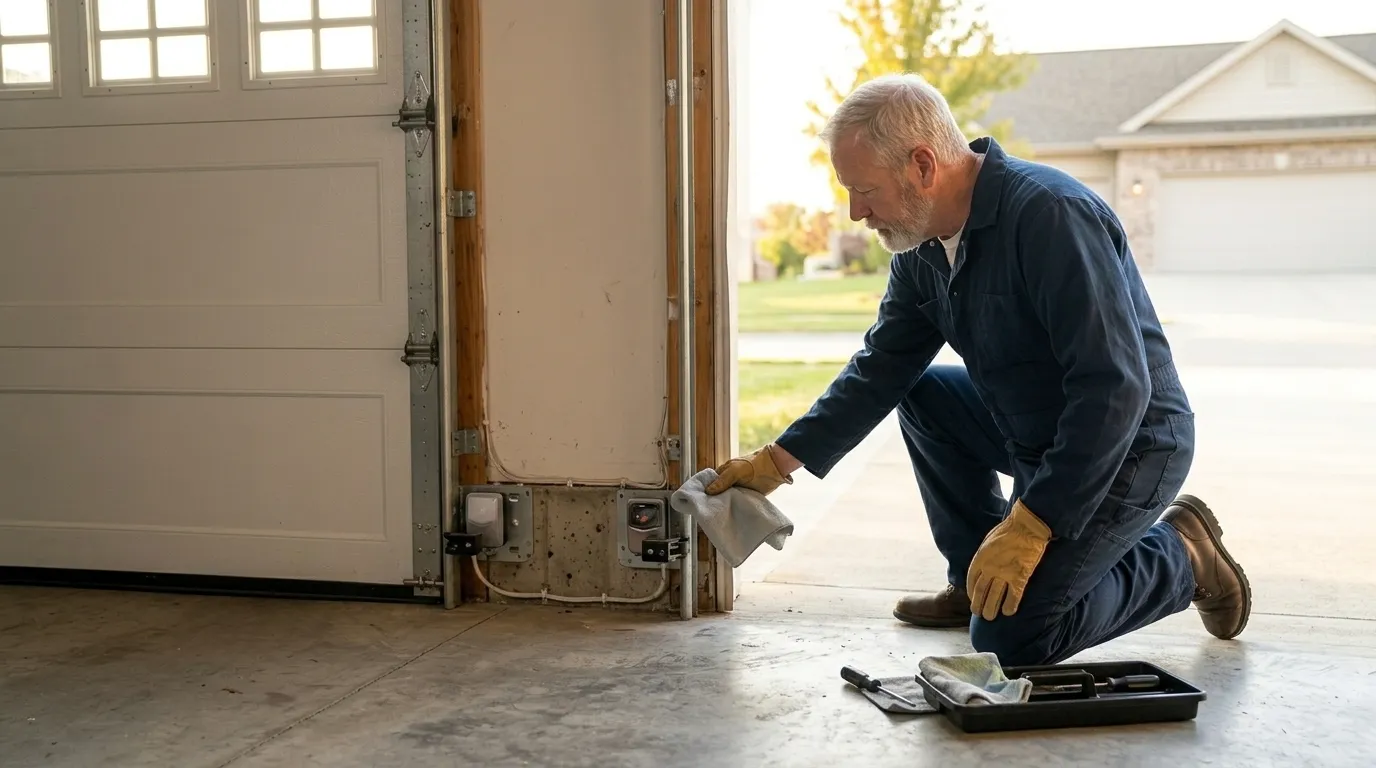
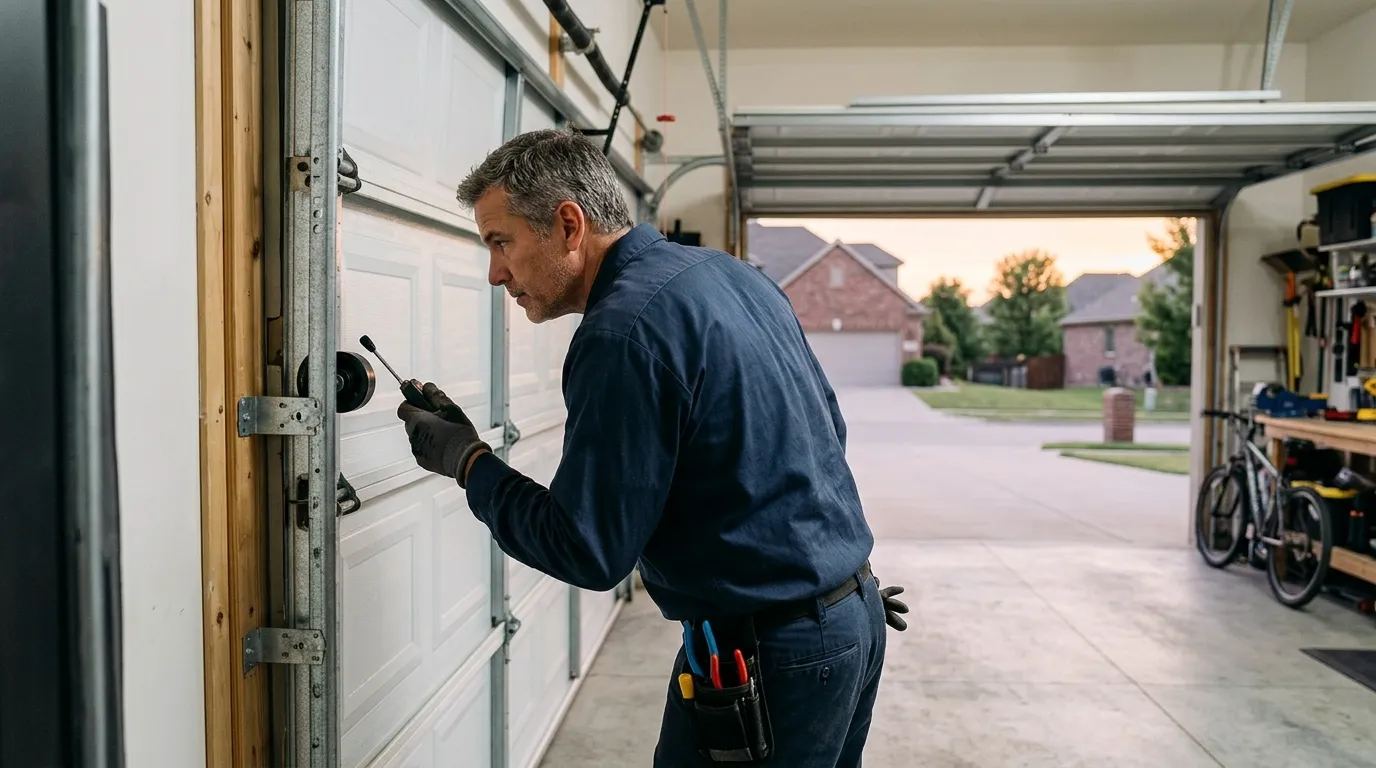
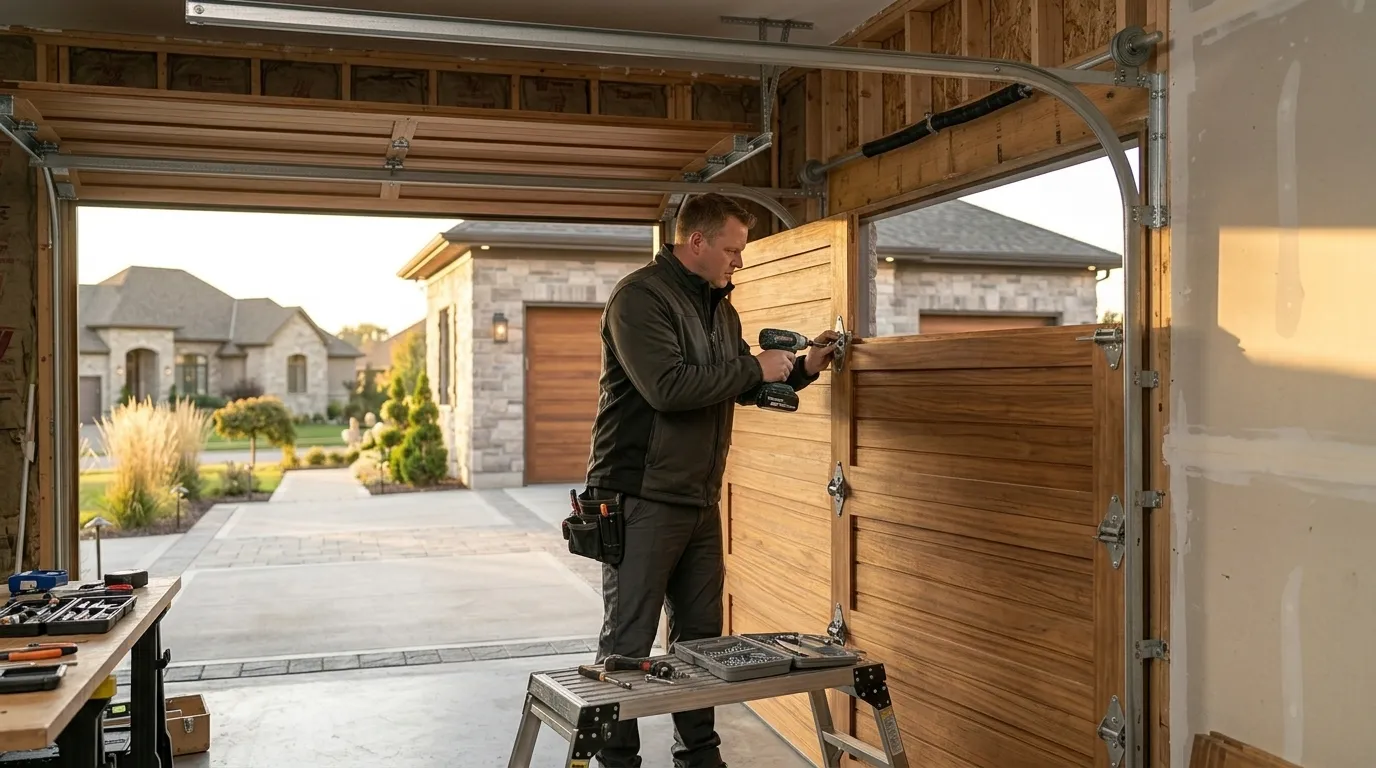
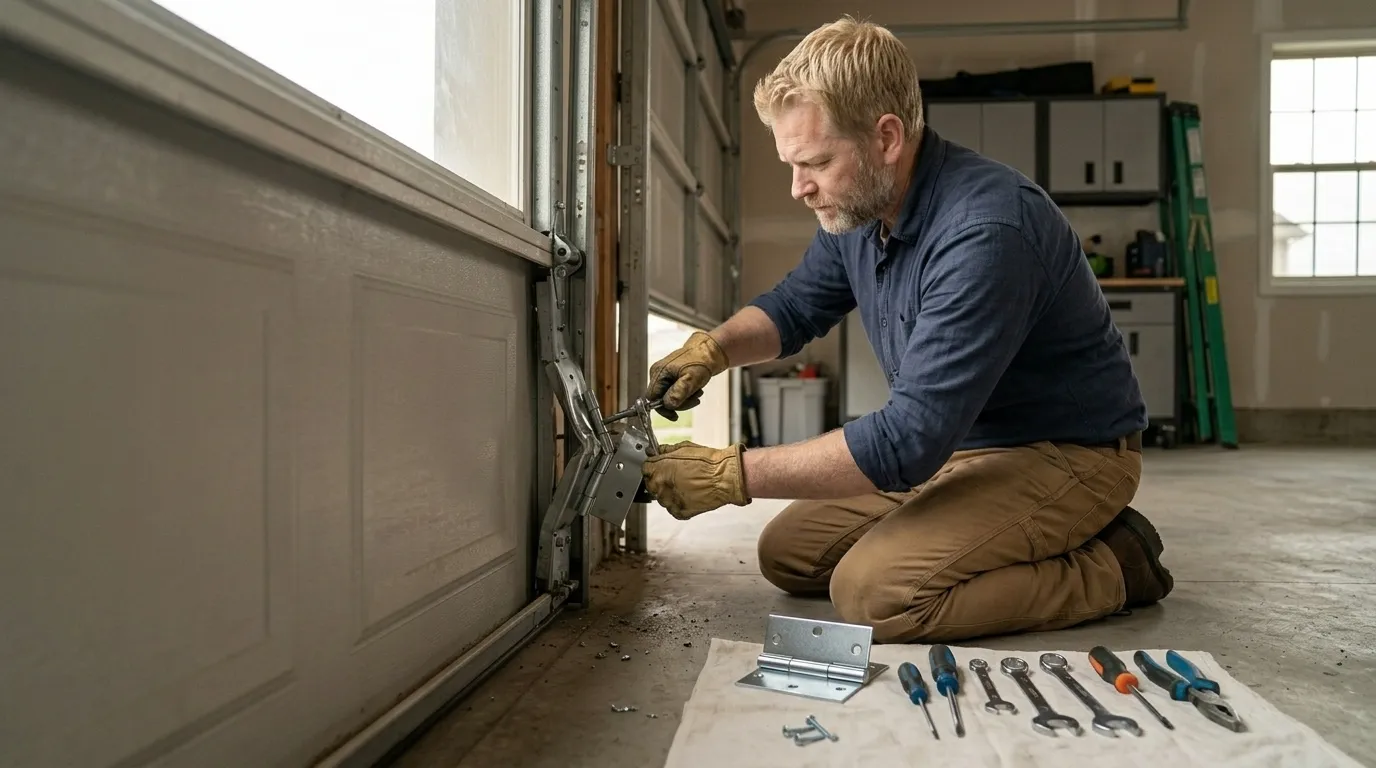
A cable job on a torsion-drum setup means winding down the spring first, pulling the old cable off the drum, and running a new one at matched length so both sides track evenly. If the drum itself is grooved or the set screw hole is stripped from years of that same drum walking, the drum gets replaced along with the cable - patching just the cable and leaving a worn drum means you're back out here again within a year. We check both sides even if only one cable failed, since a door built the same year on the same hardware tends to wear both cables close to evenly. One honest limitation: if the track is bent from the door running crooked before the cable was replaced, that's a separate repair, and we'll tell you straight if it needs it rather than bolting a new cable onto a track that's going to bind.
What You Are Seeing
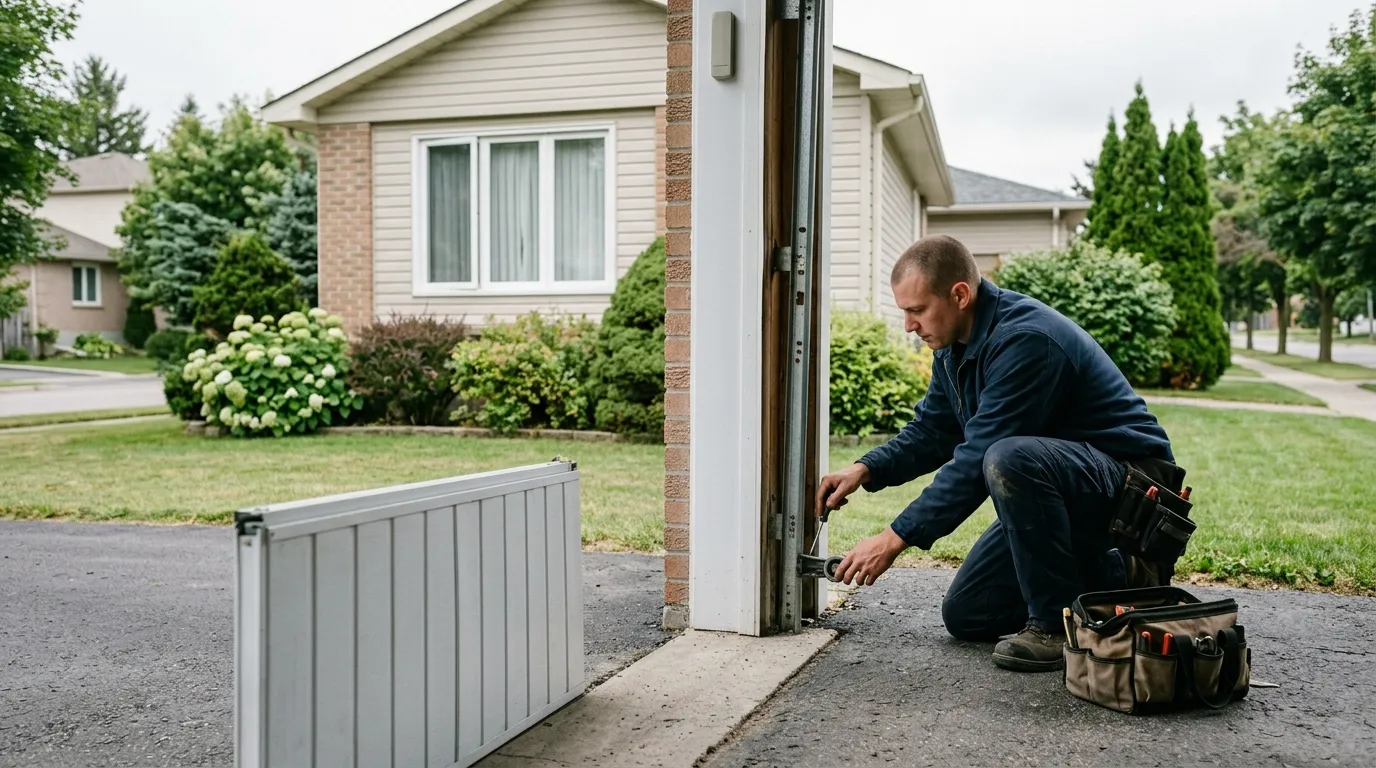
The clearest sign is a door that lifts unevenly, dropping lower on one side as it opens or closes, sometimes with a visible slack loop of cable near the bottom bracket. Some owners hear a snap and the door won't budge at all - that's a full cable break, and the door should stay down until it's looked at, since the other cable is carrying the whole load unevenly. A door that shudders or jerks partway through its cycle, especially near the top, often means the cable is riding rough on the drum rather than fully broken yet. If you catch it at that stage, the fix is simpler and cheaper than waiting for the second cable to go too.