What Causes It Around Here
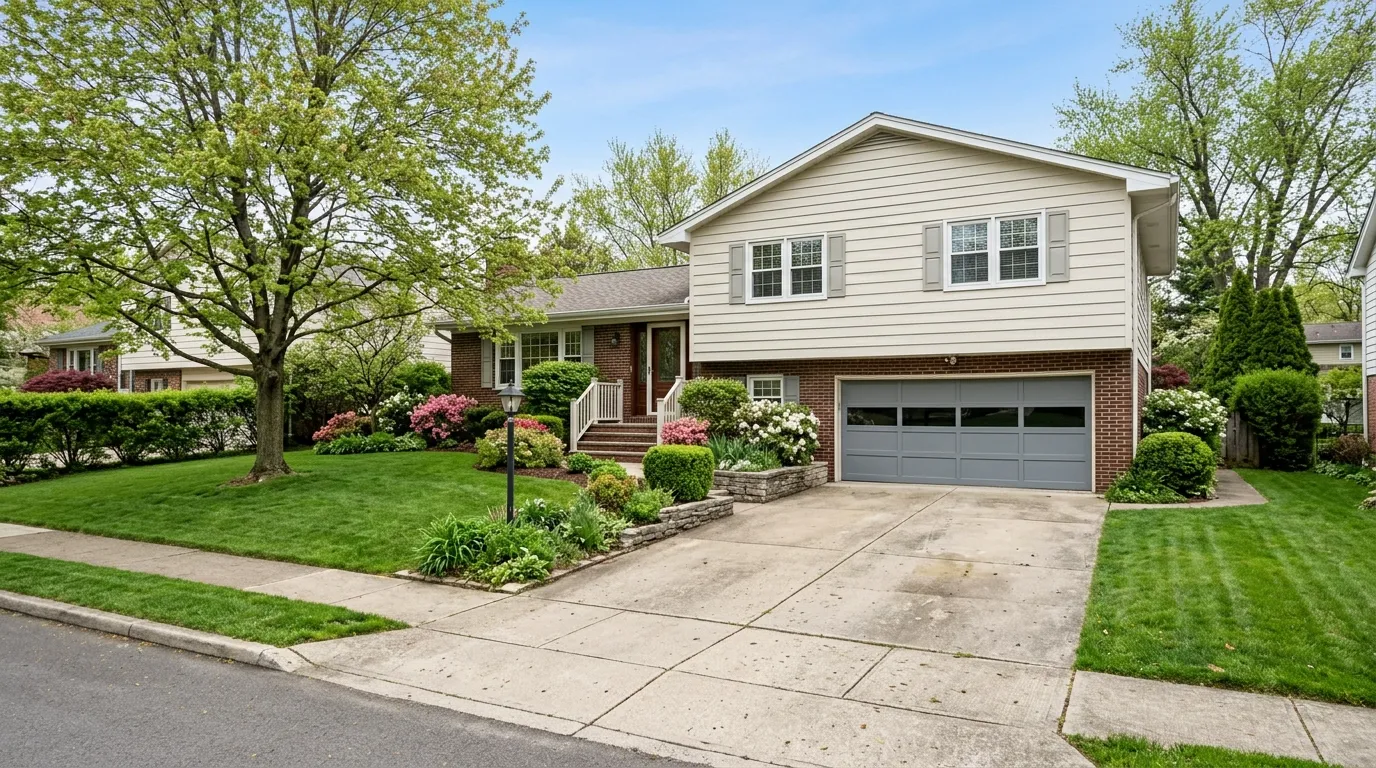
Most of the Weatherford service area was built out between 1966 and 2010, with the median home dating to 1990. Hudson Oaks skews newer than that - a lot of the houses here went up around 2002, well into the era of builder-grade steel doors and pre-hung openers installed as part of the original build. That matters for what's failing now.
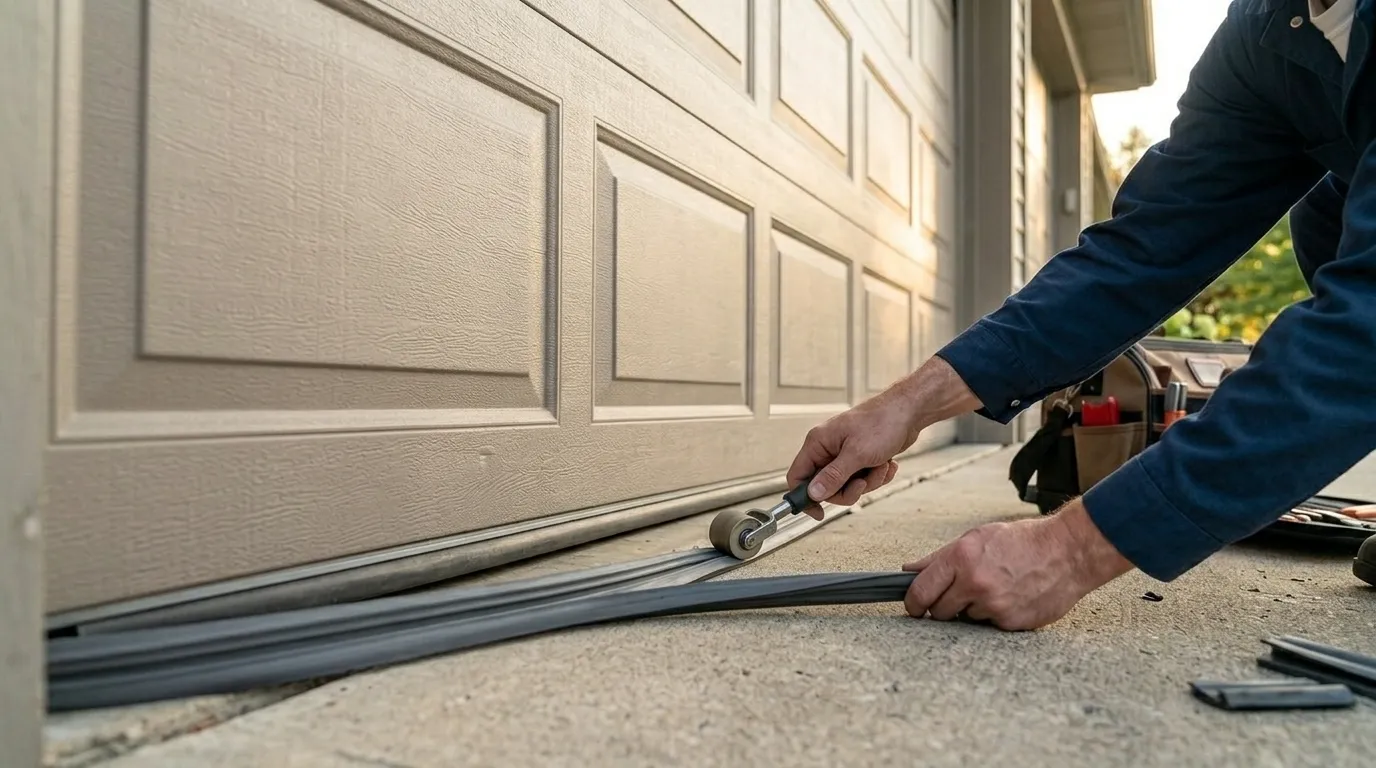
A door put in during a 2002 build is past 20 years old, which is the point where the factory finish starts chalking, the bottom seal has hardened past useful, and the original torsion spring is nearing the end of its cycle count even on a door that's never had a hard hit. These aren't the warped, dented one-piece doors you find on 1970s stock elsewhere in the area - they're double-layer steel sectional doors with foam-core insulation, and when they fail it's usually the spring or the opener gear, not the panels themselves.
Owners here also tend to be replacing by choice more than by breakdown. With median household income in the service area at $85,625, and Hudson Oaks running well above that, a fair number of these jobs are upgrade calls - insulated doors, quieter openers - rather than emergency swaps.
What the Repair Takes
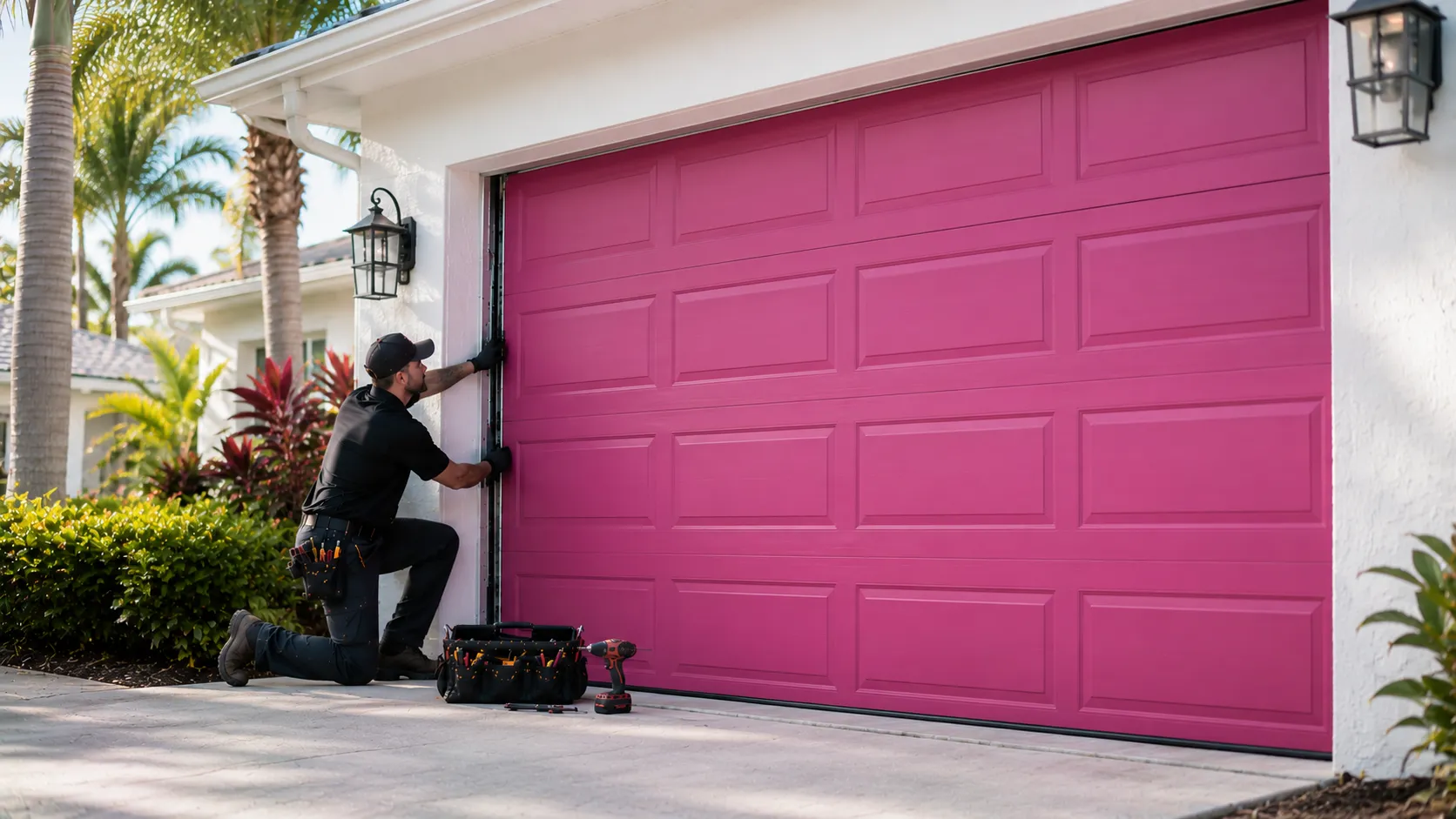
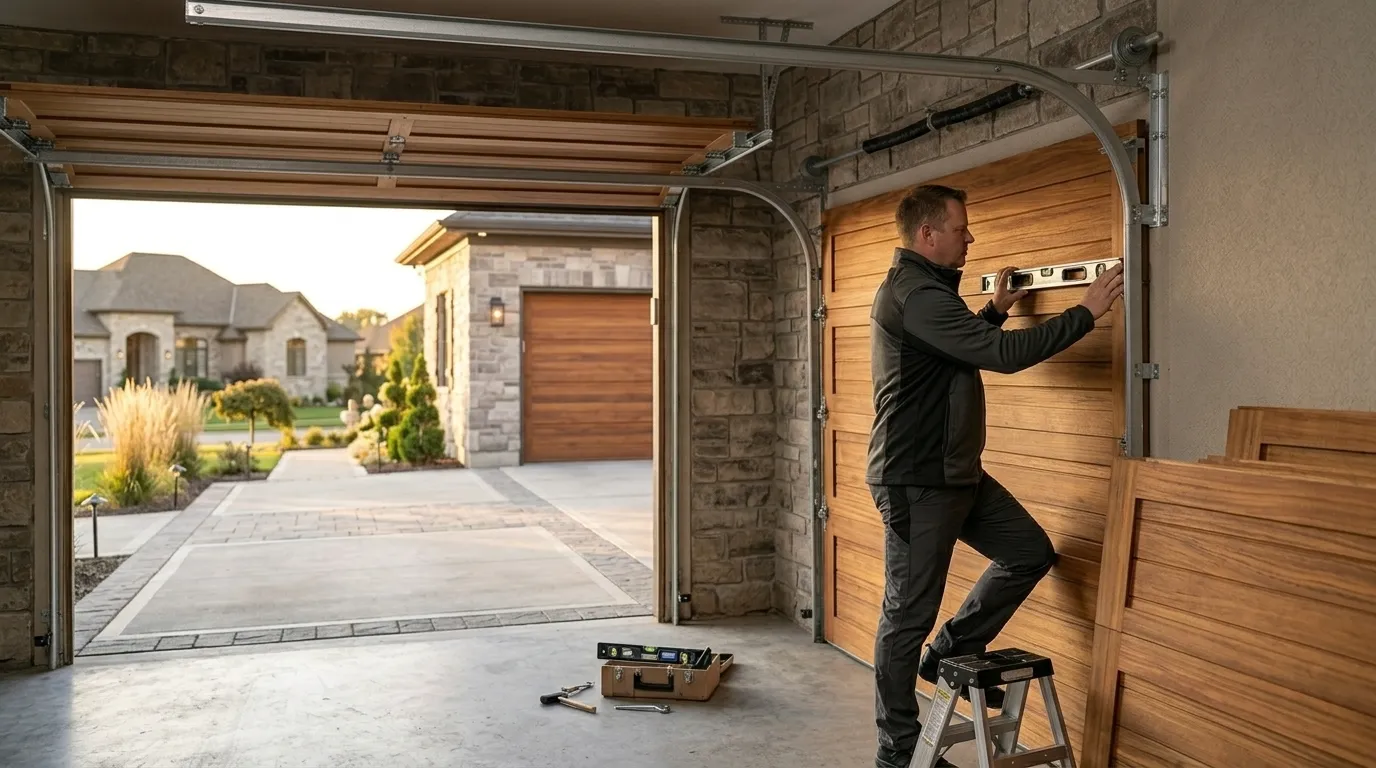
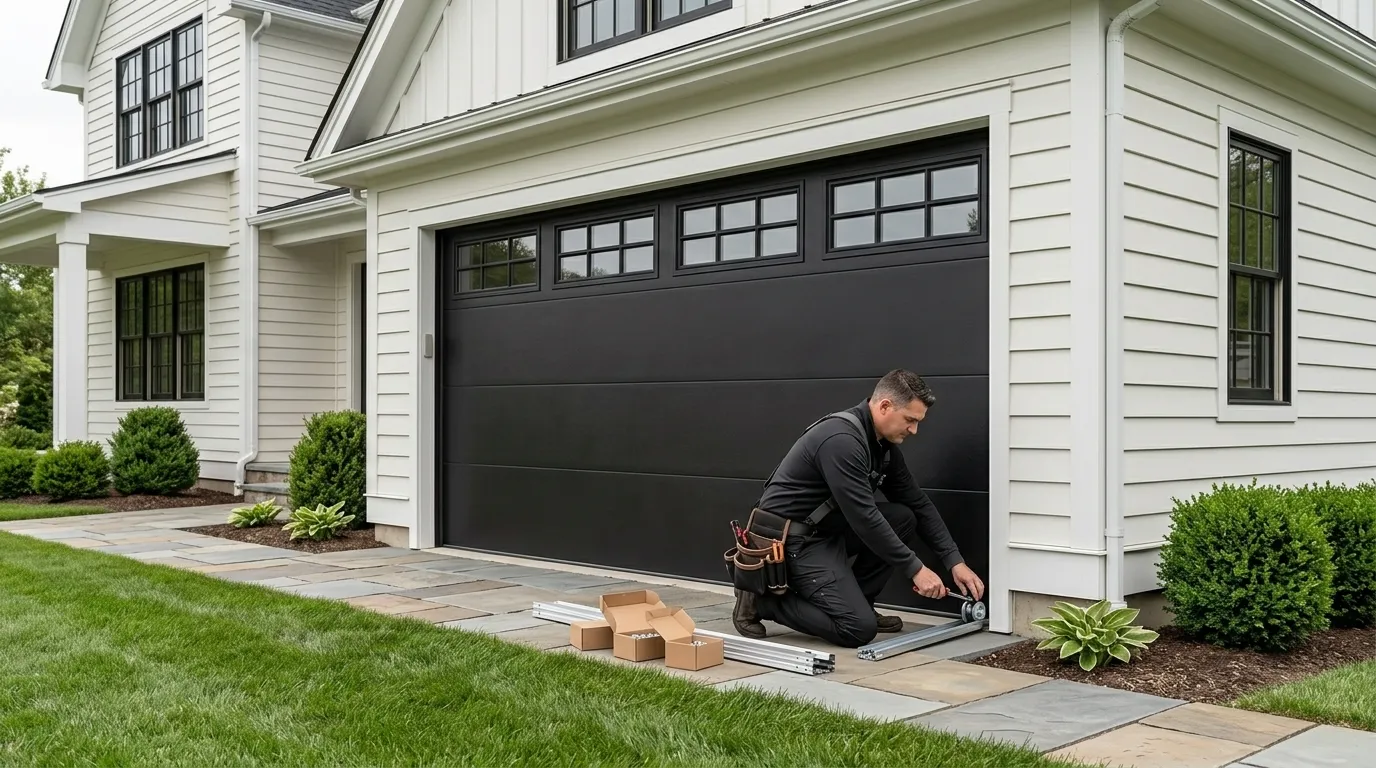
A full install starts with the opening, not the door. Homes from the early 2000s in this area were framed to fairly standard 7-foot heights, but headroom for the torsion spring and shaft varies enough between builders that we measure before we quote - we don't sell off a phone description.
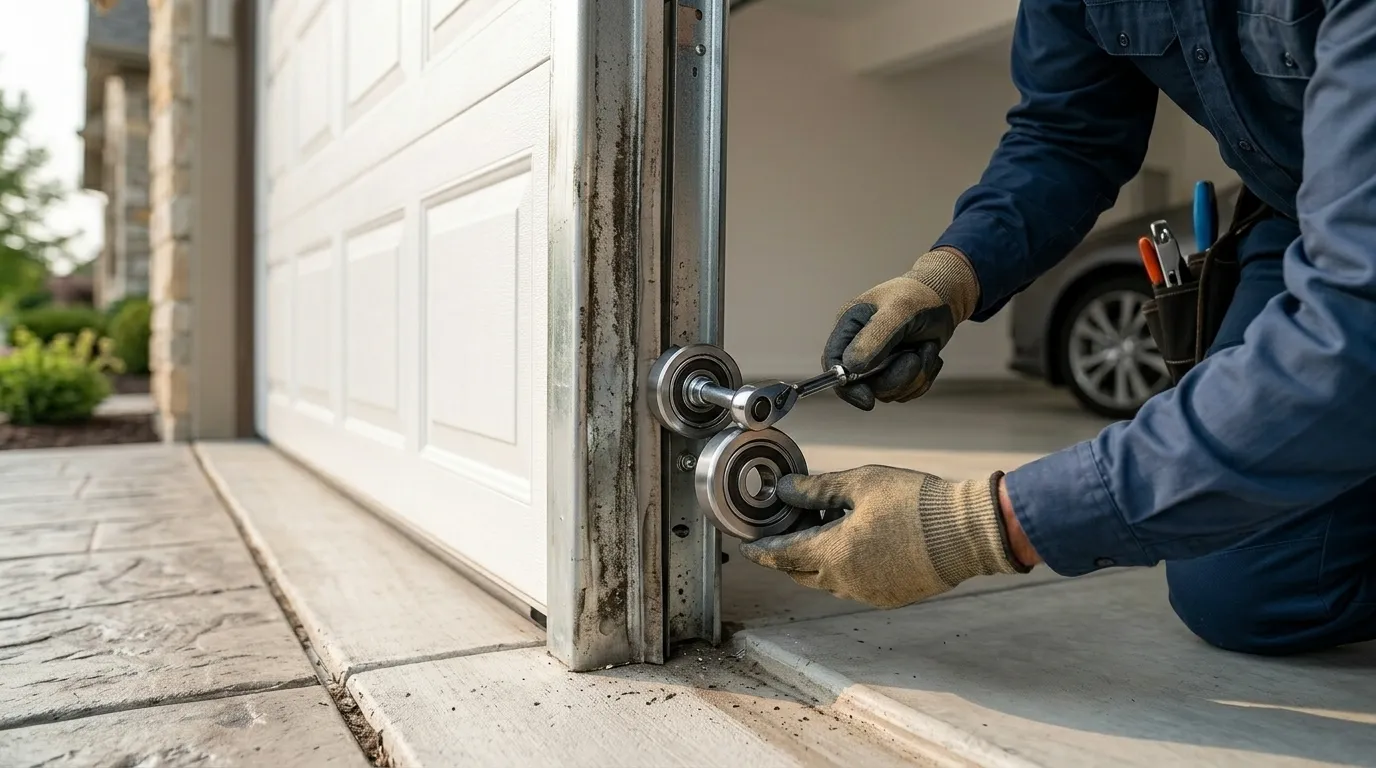
Once the opening's confirmed, the job is: pull the old door and track, set new vertical and horizontal track, size and install the torsion spring to the new door's weight (a heavier insulated door needs a different spring than the hollow-core original), mount the new opener bracket if the opener's being replaced too, and balance the whole assembly by hand before it ever touches a remote.
The one thing we won't do is rush a mismatched spring onto a heavier door to save a trip. Undersized springs on insulated doors are one of the more common comebacks in this kind of work, and we'd rather order the right part than install the wrong one twice.
What You Are Seeing
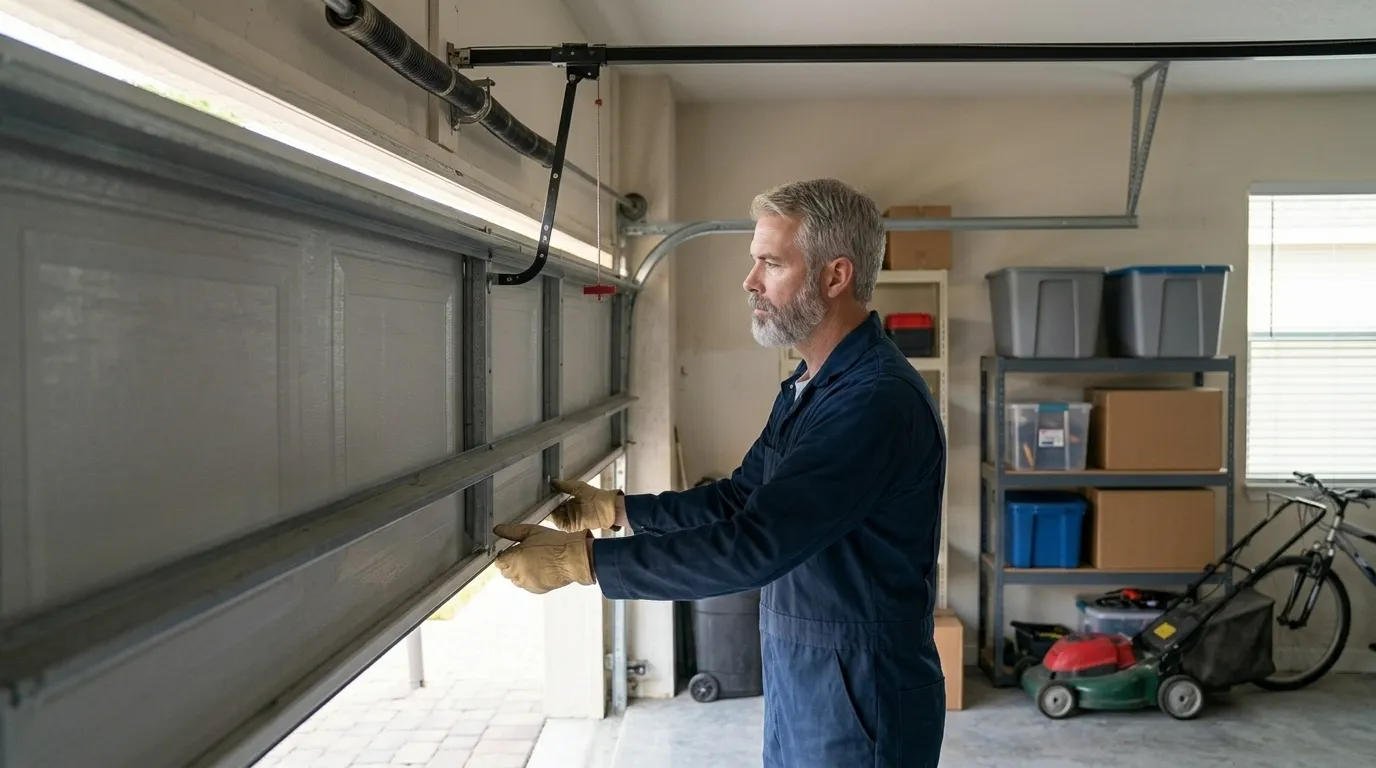
If your door is original to a 2002-era build, look for the seams on the bottom two panels first - foam-core doors from that period often show delamination there before anywhere else, a soft bubbling under the steel skin rather than a dent. That's a replace call, not a patch.
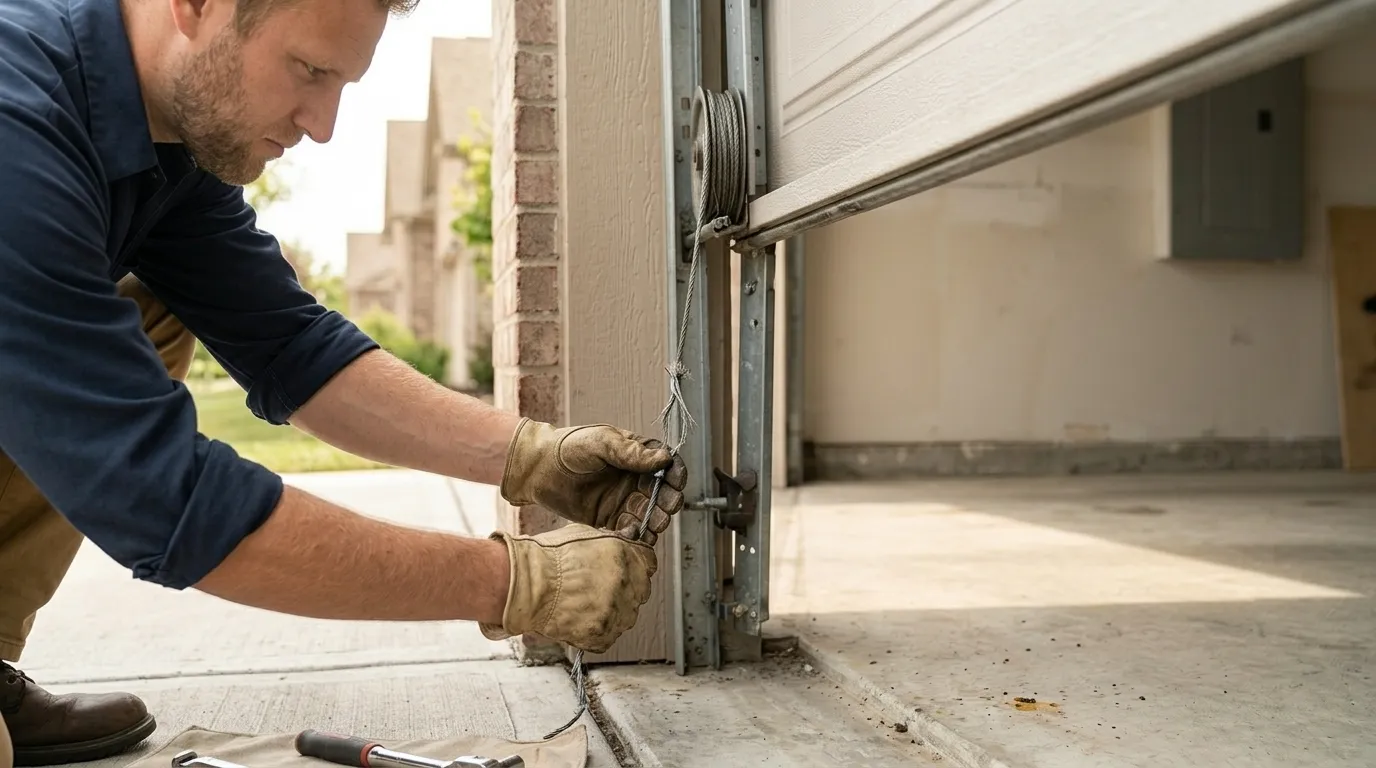
On the opener side, a motor that runs but the door barely moves, or moves unevenly side to side, usually means the original spring has lost tension gradually rather than snapped outright - which is common on a door nearing 20 years old that's never been serviced. It'll still open. It's working harder to do it, and the cable and drum are wearing faster because of it.
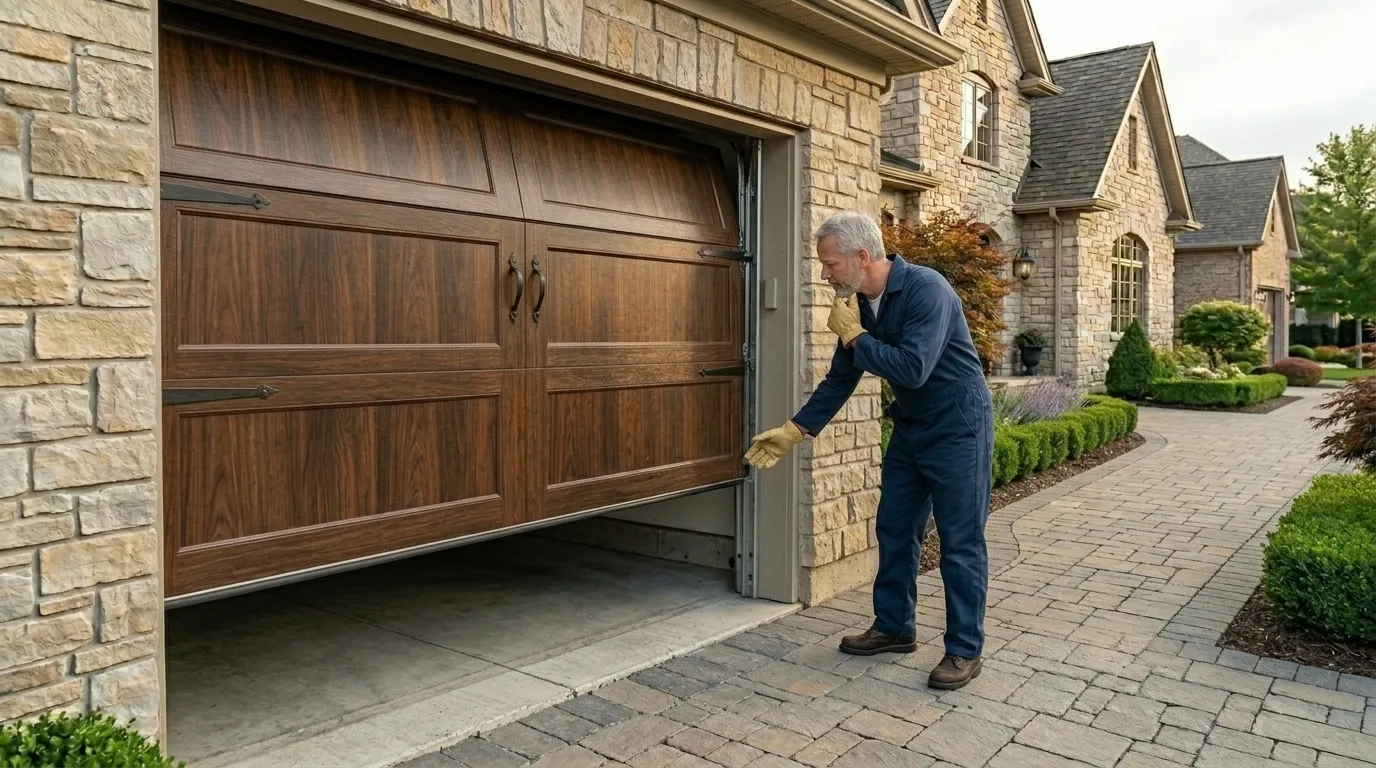
A door that reverses on its own partway down is almost always a sensor or limit-switch issue on the opener, not the door itself - worth ruling out before you assume you need a full new door. Not every symptom on a newer-stock house means replacement; sometimes it's a twenty-dollar sensor realignment.