24/7 Emergency Service Open 7 days · 7am–8pm Serving Weatherford, TX & nearby
(682) 345-3516
Weatherford, TX

What That Noise From Your Garage Door Is Actually Telling You

A guide for Weatherford homeowners on garage door noises tied to 1980s-90s hardware, older torsion springs, and the area's heat cycles that wear parts differently than newer builds.

What That Noise From Your Garage Door Is Actually Telling You

What Is Going On

Most of the housing stock around Weatherford went up between 1966 and 2010, with the bulk of it landing in the 1980s and 90s across the thirteen named areas we work - Hudson Oaks, Willow Park, Aledo, and the rest of the belt out past them. That matters for noise because a door installed in, say, 1991 has had three decades of thermal cycling on its torsion spring and hardware, and the failure pattern from that age of equipment is different from what you'd hear on a door put in during the last ten years.

A grinding sound usually points to a roller that has worn its bearing race down, which happens gradually and picks up speed once the bearing starts to flat-spot. A rhythmic thump once per rotation is almost always a flat spot on a roller or a bent track section. A loud bang, followed by the door refusing to open, is a spring failure - on a house from the 80s or 90s stock, that spring has likely never been replaced, and torsion springs in this age bracket are near or past their expected cycle life regardless of how the door looks otherwise.

Squeaking that rises and falls with the door's travel is friction, not damage yet, and it's the cheapest one to catch early.

What to Check

Start by looking at the track brackets where they bolt to the frame. On houses from the 1980s-90s stock common here, those brackets were often installed with lag screws into framing that has since dried and shrunk slightly, so a loose bracket rattling against wood is a common and fixable noise, not a structural problem.

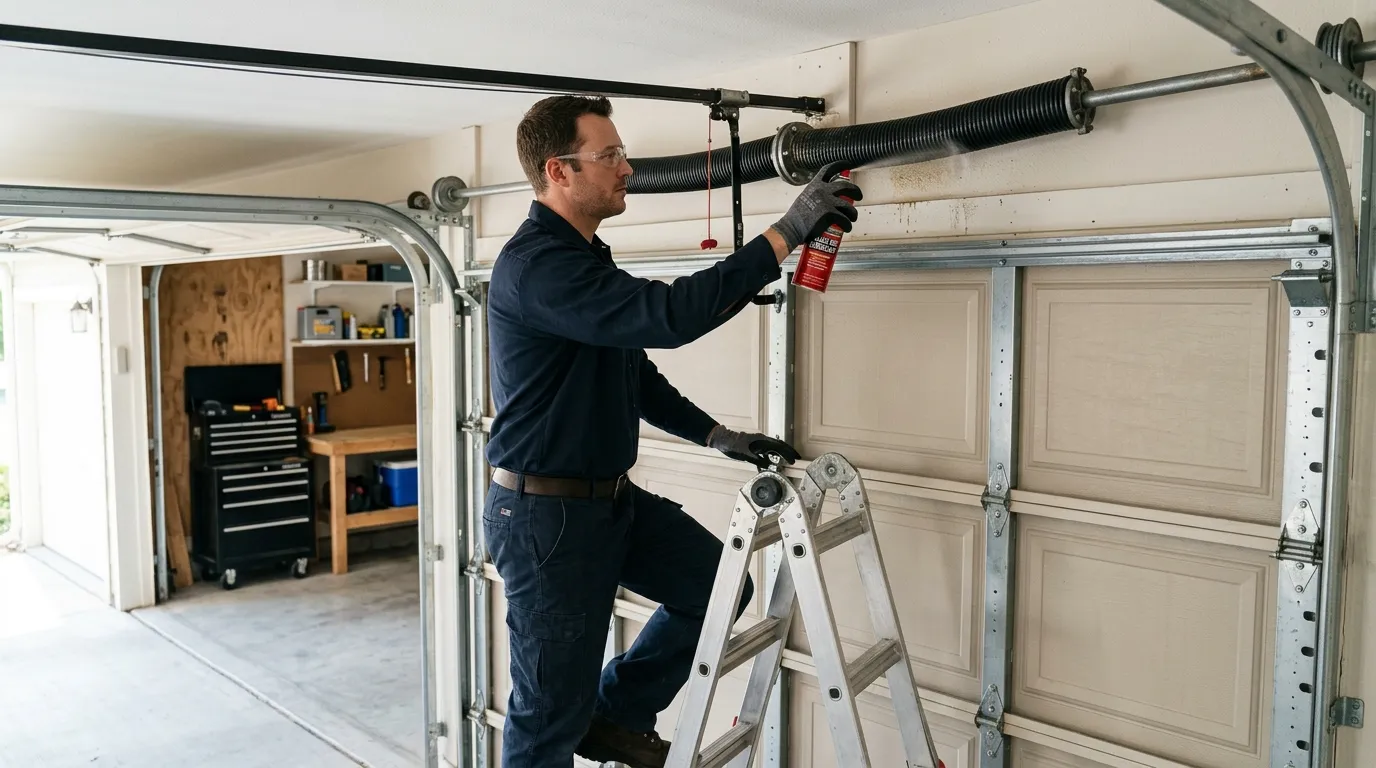
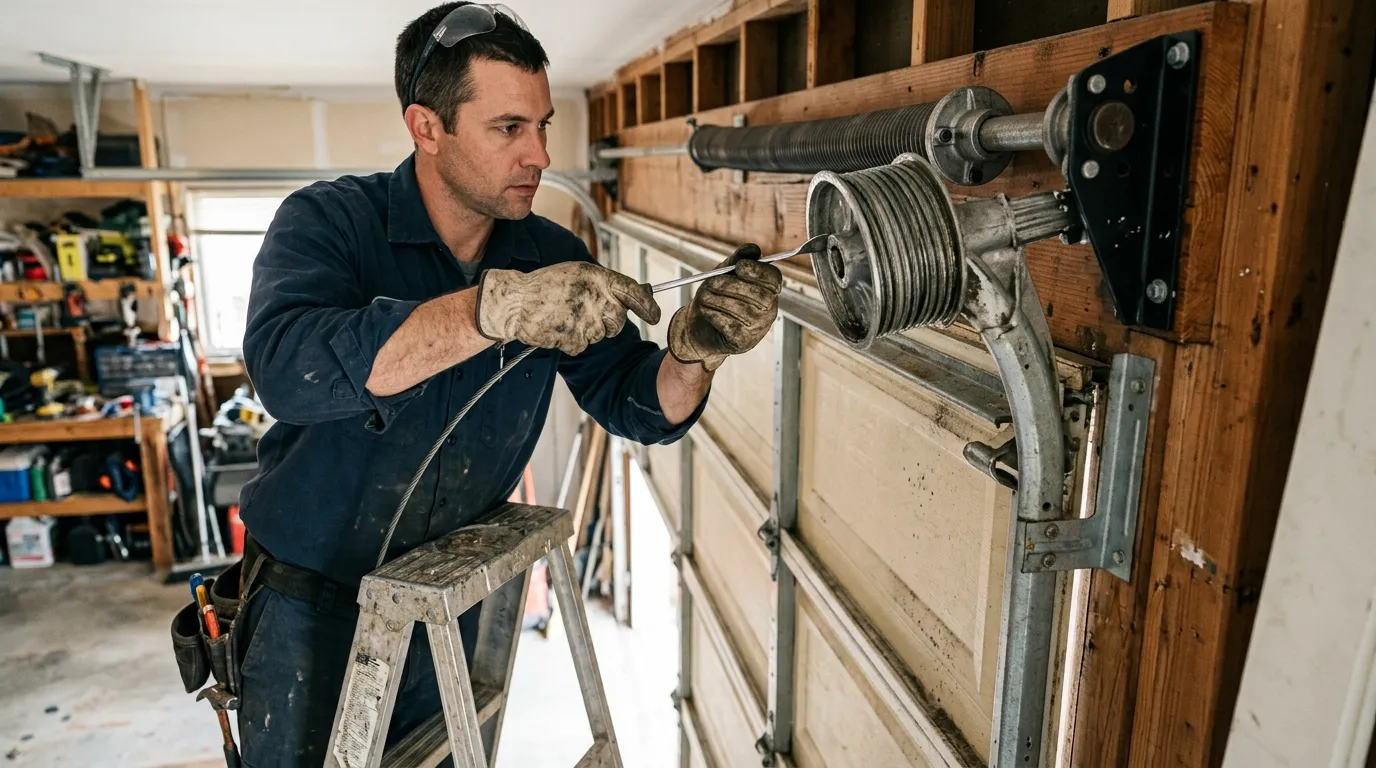
Next, look at the springs themselves - one on each side of the header for a standard double door. If you see a visible gap in the coil, stop opening the door by motor and don't try to force it; a broken torsion spring under tension is not something to work around.

Check the rollers by hand with the door closed and unplugged. Nylon rollers wear quietly and fail by cracking; steel rollers on older installs wear their bearings and start grinding audibly well before they seize. If your rollers are still steel with no visible nylon jacket, that's consistent with an install closer to the 1990 median build year for this area, and it's worth a look regardless of current noise level.

Last, listen at the opener chain or belt. A slapping sound against the rail usually means the chain has stretched and needs tensioning, which is a five-minute adjustment, not a replacement.

How Local Conditions Play In

This area sits in a moderate heat climate band, not the extreme end of Texas, but summers still push metal parts through real expansion and contraction cycles year after year. Lubricant that would hold up fine in a milder climate dries out faster here, and dried lubricant on a roller or hinge is one of the most common sources of new squeaking we hear about starting in late spring.

Because a lot of the housing stock in the service area dates to the 1980s and 90s, the springs and hardware on many doors are original or close to it, and heat cycling over that many summers accelerates metal fatigue in ways that show up as noise before they show up as failure. A spring that's been through thirty-plus summers of expansion and contraction is closer to the end of its cycle life than the same spring would be in a climate with less thermal swing.

We don't see the kind of severe cold-snap hardware failure that shows up further north, so if a noise appears suddenly in winter here, it's more often a lubrication issue than a cold-brittle part.

When to Get Help

Call before the door stops working, not after. A grinding roller or a loose bracket is a controlled repair; a spring that lets go while the door is halfway up is not, and it can damage the track or the opener on the way down.

We won't tell you to replace a door that's making noise but otherwise tracking straight and closing flush - sometimes it's a $20 roller job. But if your hardware dates to that 1980s-90s build wave common across Hudson Oaks, Willow Park, Aledo, and the rest of this area, and you're hearing a new noise on top of a door that's already 25-30 years old, replacement of the spring and rollers together often makes more sense than fixing one part at a time, since the rest is close behind it.

One honest limit: we can diagnose a lot over the phone, but a noise that only shows up intermittently is hard to pin down without someone standing there when it happens. If it's occasional, try to catch it on your phone's voice memo before you call.
How it works

From “it’s stuck” to “it’s fixed”

Tell us what’s wrong - Weatherford garage door service

Tell us what’s wrong

Describe the symptom - won’t open, loud bang, opener runs but the door won’t move.

On-site diagnosis - Weatherford garage door service

On-site diagnosis

A technician tests the door under power and by hand and finds what actually failed.

Clear, up-front plan - Weatherford garage door service

Clear, up-front plan

You get the fix that’s needed and what drives the cost - before any work starts.

Repaired & tested - Weatherford garage door service

Repaired & tested

The repair is done, the door is set true and tested, and the work area left clean.

Serving Weatherford, TX - tell us what your door’s doing and we’ll take it from there.

How we work

What to expect

Diagnosis firstEvery visit starts by finding what actually failed - not a pre-written parts list.
The right part for the doorSprings and openers matched to the door’s weight and age, so the fix holds up.
Straight answersWhen a repair makes more sense than a replacement - or the reverse - you hear it plainly.
Clean, careful workTension released safely, hardware set true, the door tested under power before we leave.
Questions

Frequently asked

Straight answers about garage door repair in Weatherford. Still unsure? Ask us directly.

Why does my garage door only make noise in summer?

Heat cycling in this moderate heat climate band dries out lubricant faster than in cooler regions, and metal hardware expands slightly. If your door is quiet in winter and noisy by June, start with lubricating the rollers and hinges before assuming a part has failed.

Is a loud bang from my garage always a broken spring?

Not always, but it's the most common cause, especially on doors from the 1980s-90s build era common in this area. If the door won't move by opener or by hand afterward, treat it as a spring failure and don't force it.

My house was built in the 1990s - should I worry about the original spring?

Torsion springs have a cycle life, and a spring installed around the 1990 median build year for homes here has likely gone through decades of heat cycling. If you're hearing new noise, it's worth having the spring checked rather than waiting for it to break.

Ready to get your garage door sorted?

Tell us what it’s doing and where you are in Weatherford - we’ll take it from there.

Request a QuoteCall