What Is Going On
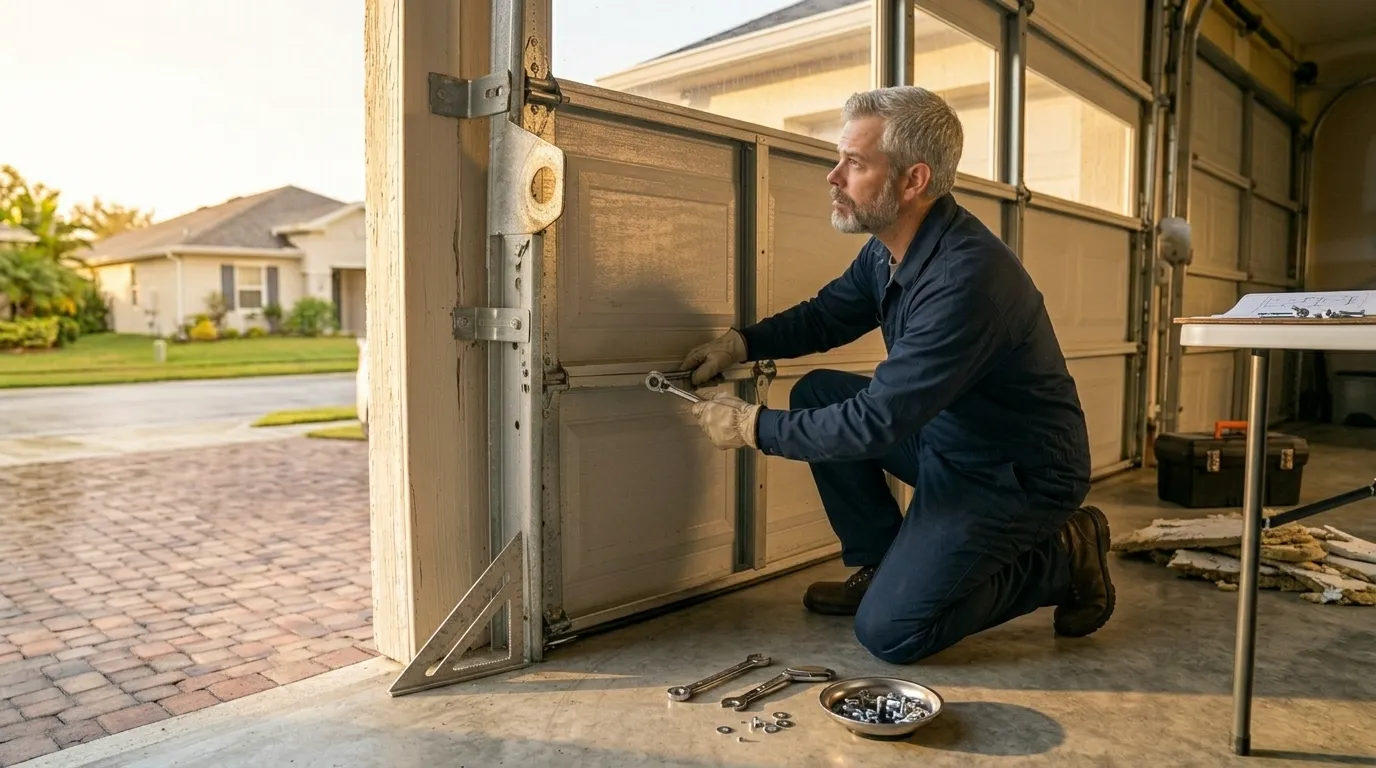
Most of the housing this company works on went up between 1966 and 2010, with the median build year sitting around 1990 and the bulk of it dating to the 1980s and 90s. That means a lot of doors out there are carrying original torsion springs that have never been touched since installation. Springs don't fail on a schedule tied to the calendar - they fail on cycle count and metal fatigue - but a spring that's already near the end of its life gets pushed over the edge by a fast temperature drop. Steel contracts when it cools, and a spring that's flexed tens of thousands of times over thirty-plus years is already carrying small stress fractures you can't see. Add a quick cold front on top of that and the last bit of give in the coil goes away. What homeowners usually notice first is a loud bang from the garage, then a door that won't lift more than a few inches, or one side that drops crooked while the other stays up. It's rarely a surprise mechanically - it's just that the age of the door and a sudden weather swing lined up on the same morning.
What to Check
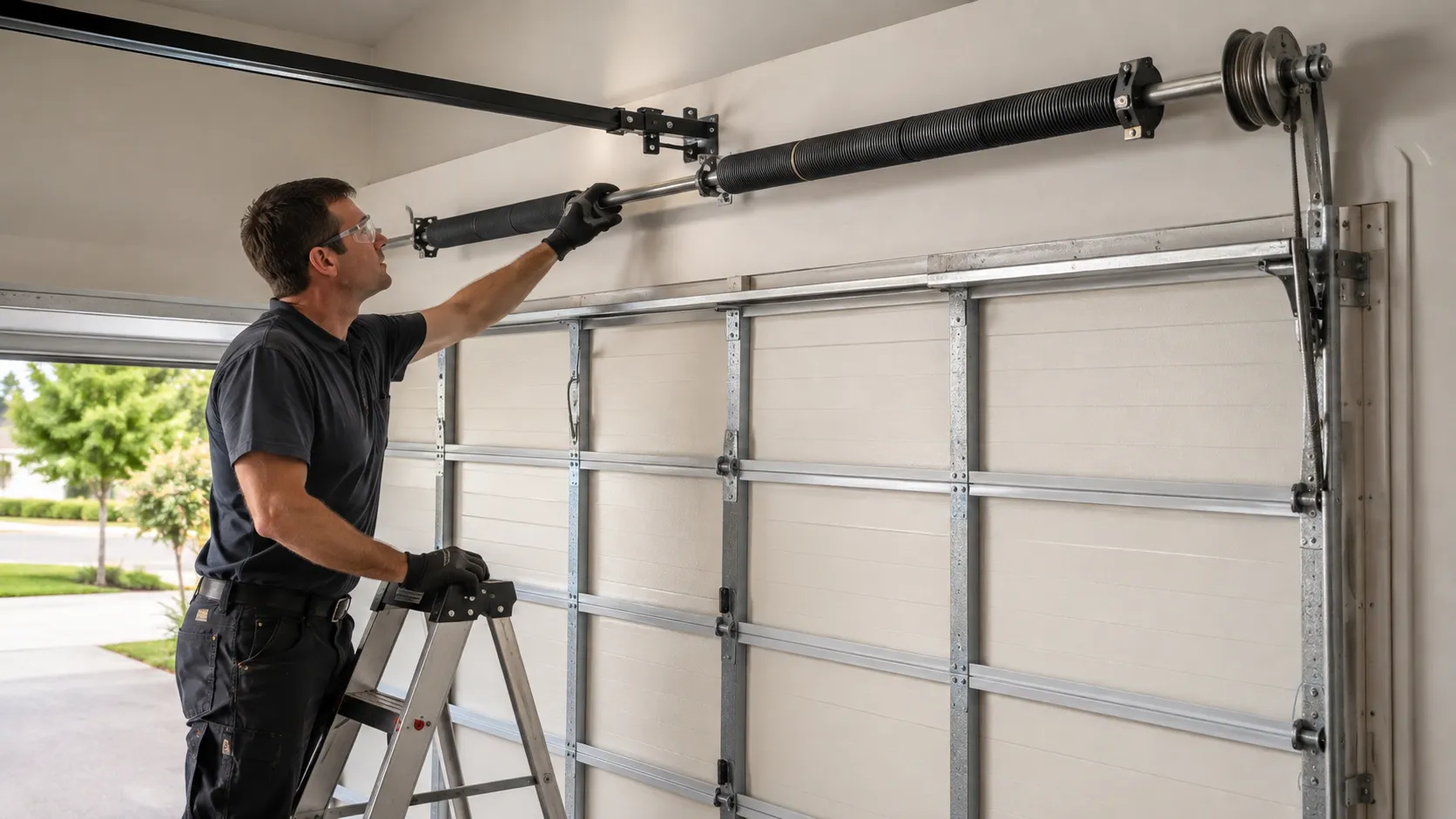
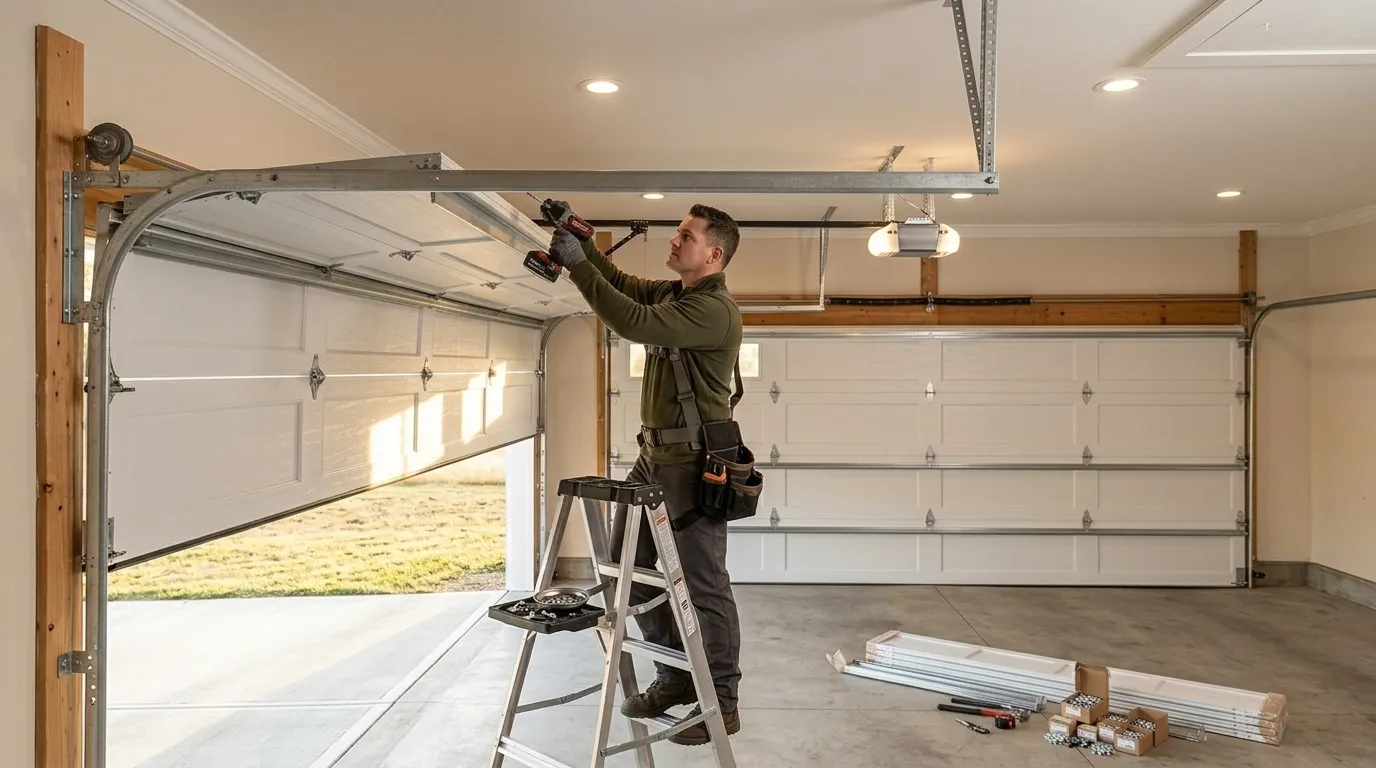
Before you call anyone, take a look at the spring itself - it's the two coiled bars above the door, either one long spring in the center or two shorter ones over the tracks. A broken one usually has a visible gap in the coil, sometimes with the two ends sitting an inch or more apart. Check for rust streaks running down from the spring onto the door panel, which tells you moisture has been sitting in that coil for a while, quietly weakening it before the cold did the rest. Try the door only with the opener disconnected - pull the red release cord and lift by hand a few inches. If it feels heavy, drops on its own, or won't hold position, the spring has lost tension even if it hasn't fully snapped. Listen, too: a spring that's about to go often makes a faint creak or pop in the days before it breaks outright, especially first thing in the morning when the garage is coldest. Don't run the opener again once you suspect a broken spring - the cables and drums aren't built to lift that weight alone, and you'll strip the opener gears trying.
When to Get Help
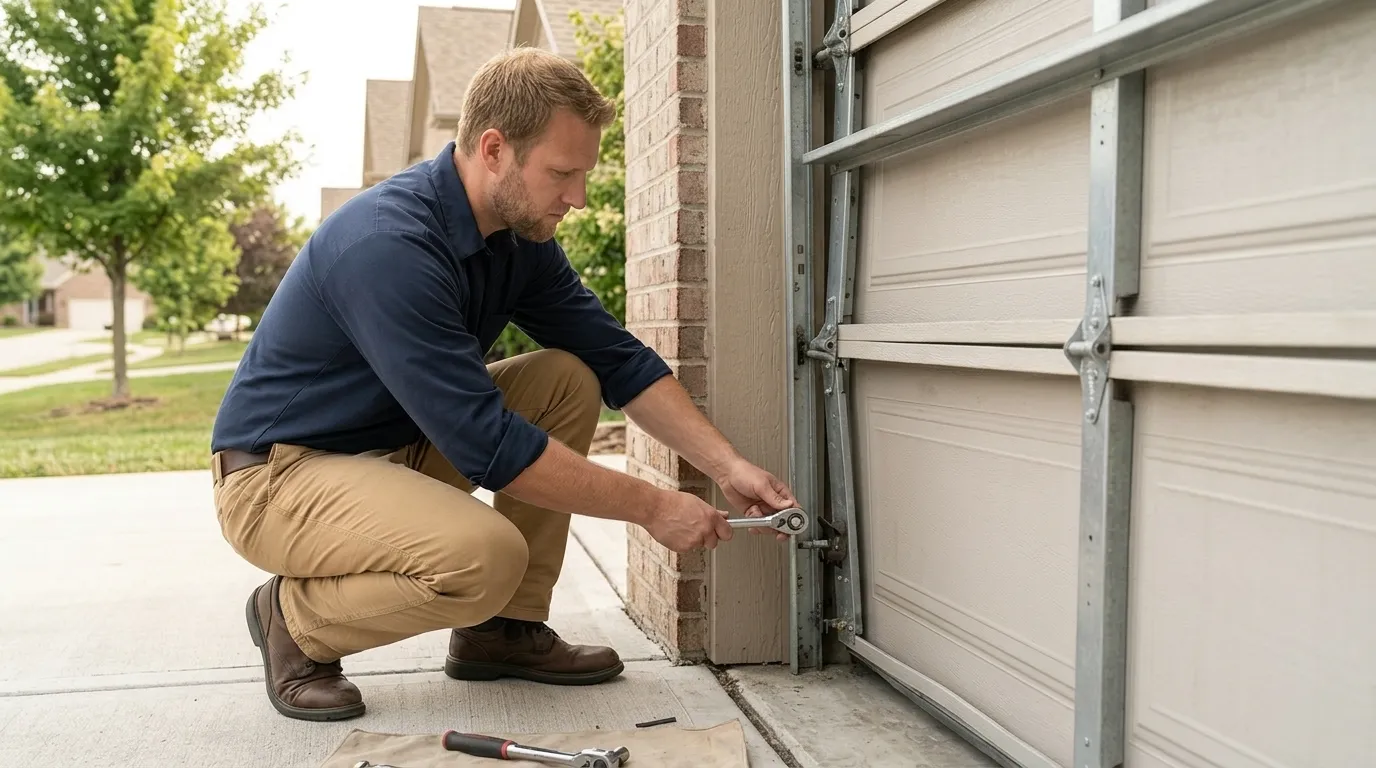
If the spring has already let go, don't force the door - a torsion spring under partial tension can still whip loose and the door itself is heavy enough to cause real injury if it drops on someone. Call once you've confirmed the gap in the coil or the door won't hold. One honest limitation: not every spring size is on the truck for every call, particularly for oversized or older commercial-style doors, so a first visit sometimes means diagnosing and ordering the right part rather than a same-day fix. For a standard residential torsion spring on the kind of door common across this area, that's less often the case. If your door is original to a house from the 1980s or early 90s and has never had the spring replaced, it's worth having it looked at before a cold front decides the timing for you. You can reach out through the site at /.