What Is Going On
When we get a call, the first thing we're figuring out is what era of door and opener we're dealing with, because that tells us almost everything else. Most of the houses in this service area went up between 1966 and 2010, with the bulk of that stock dating to the 1980s and 90s across the area's thirteen named communities. That means a lot of doors and openers here are original equipment from a building boom that peaked in the Reagan and Clinton years, not from the last decade. A door that old has had thirty-plus years of daily cycles on the same torsion spring, the same rollers, sometimes the same chain-drive opener with a light bulb still in the housing. Nothing about that is unusual for this area, but it does mean a "quick fix" call often turns into a conversation about whether the spring, the cable, and the opener logic board are all reaching the end of their service life around the same time. We don't assume every call is a full replacement, but we also don't pretend a thirty-year-old door and a five-year-old one wear out the same way.
What to Check
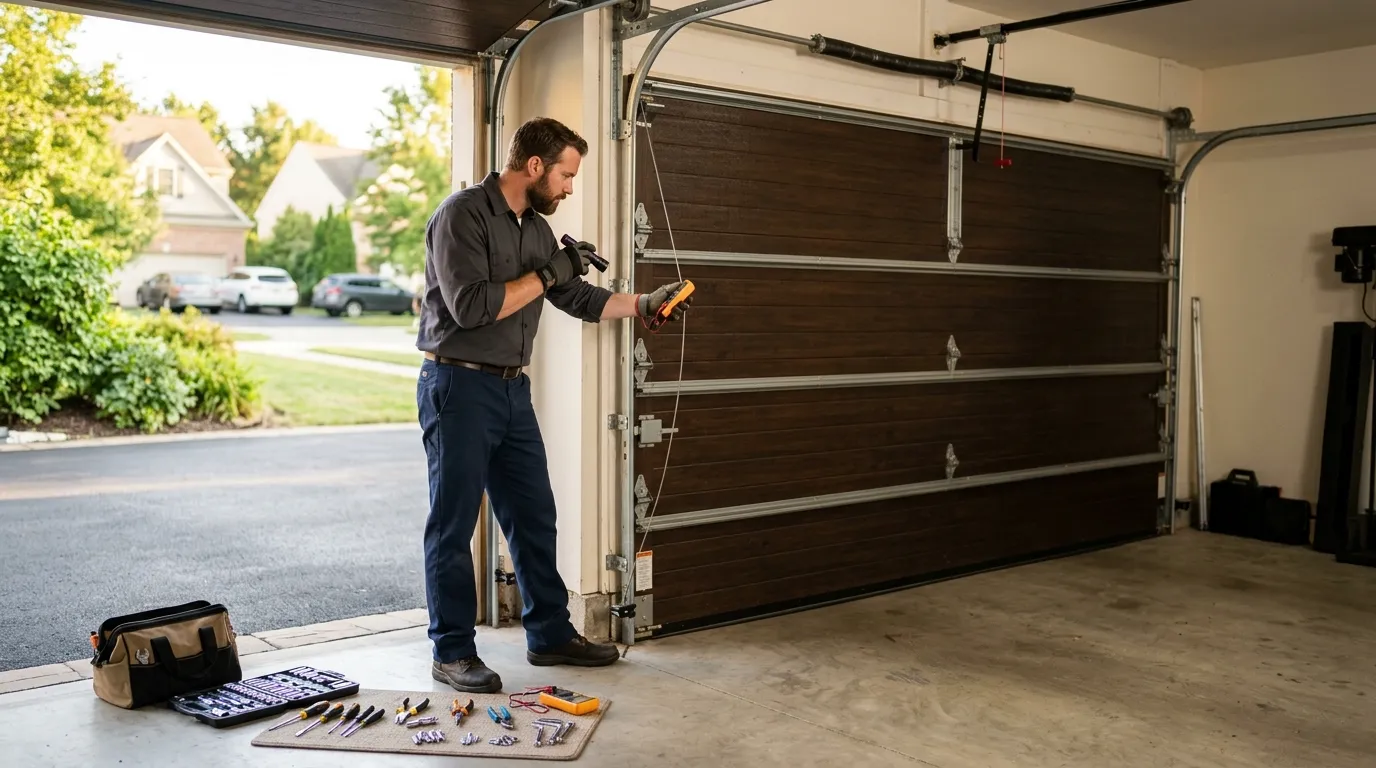
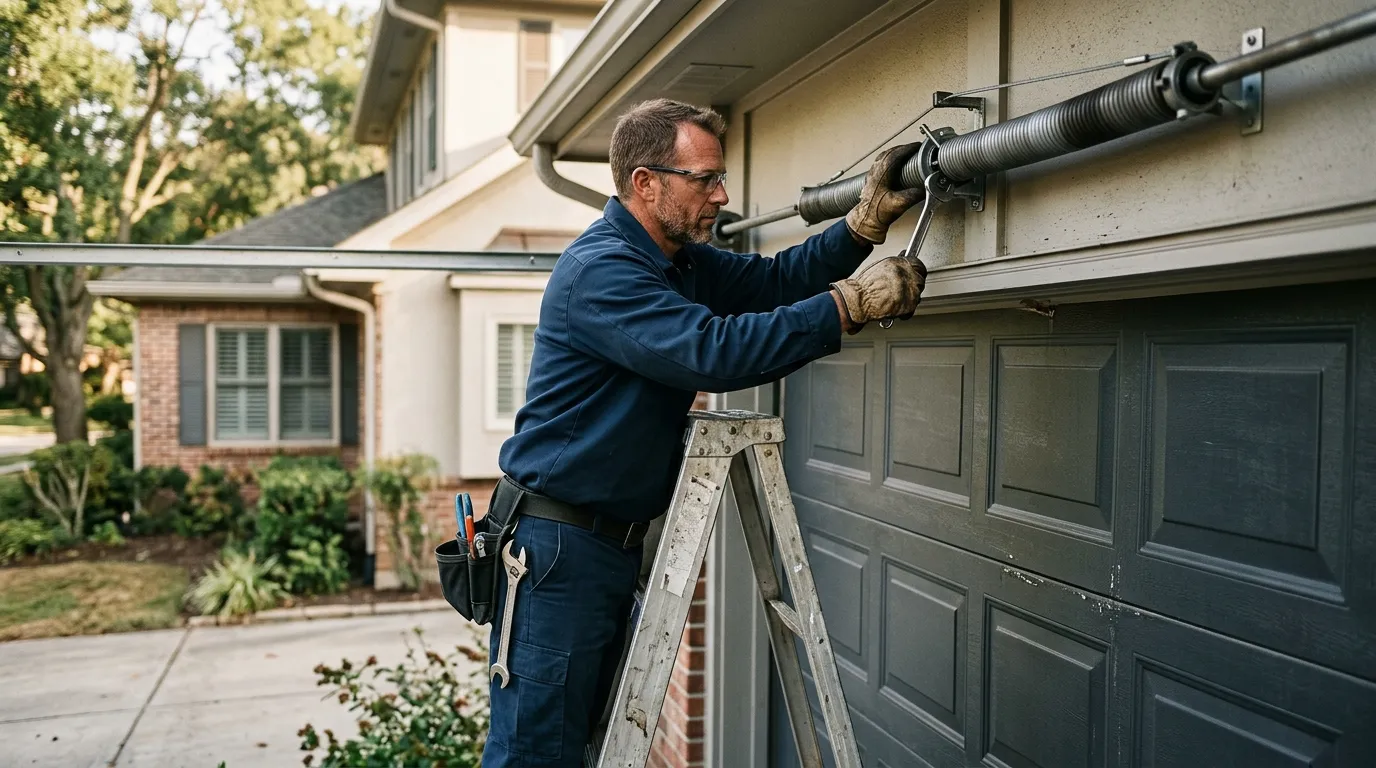
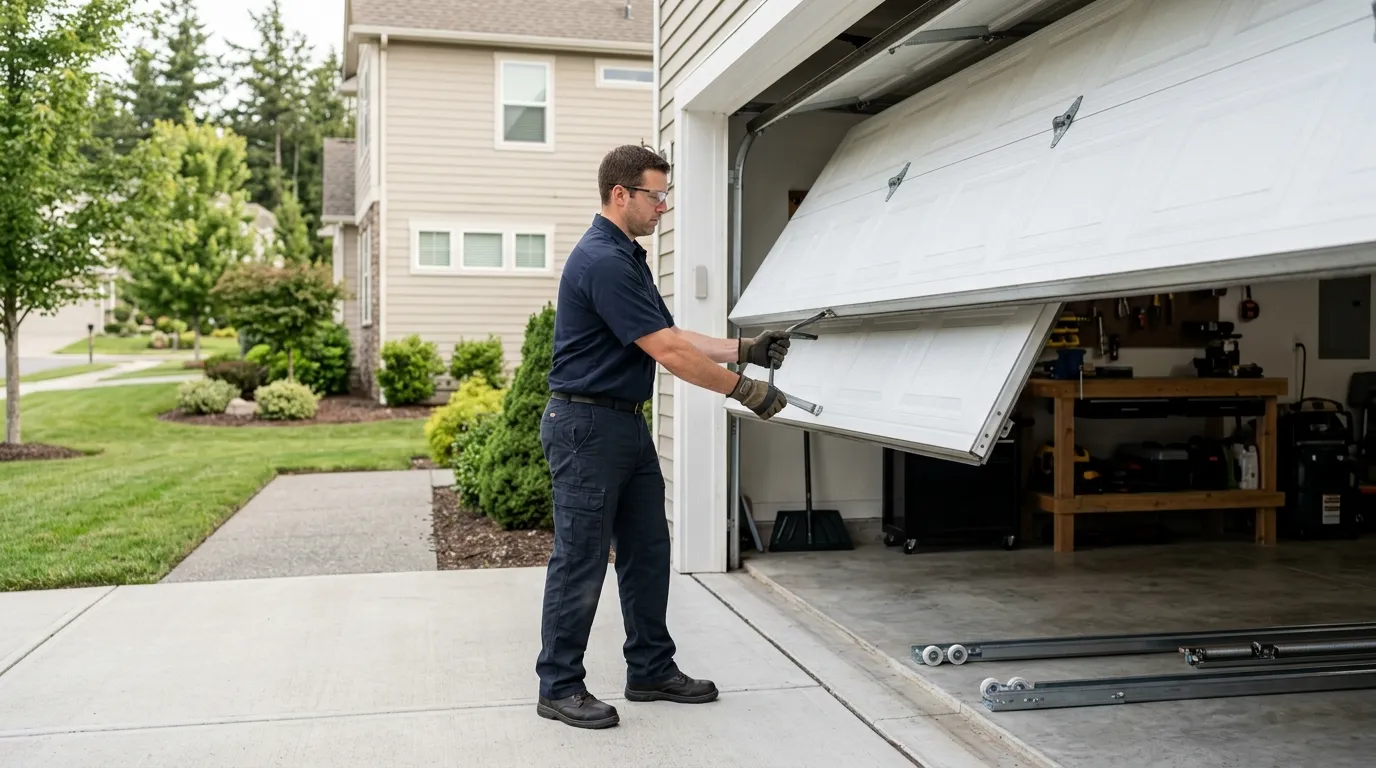
Before you call anyone, there's a short list worth walking through yourself. Pull the release cord and lift the door by hand about halfway - if it doesn't hold that position on its own, the spring is losing tension and the opener has been fighting it for a while. Stand at the tracks and watch the rollers as the door runs; wobble or a roller riding outside the track edge means the hardware has shifted, which is common once a house passes the twenty or thirty year mark. Listen to the opener itself. A motor that strains, hesitates, or reverses partway through the cycle is usually not an opener problem at all - it's the door telling you it's heavier to lift than it should be. Check the bottom weatherstrip for cracking or flattening, and look at any plastic pulleys or idler wheels for chalky, sun-faded surfaces. None of this requires tools. What it does is tell you, before a tech ever shows up, whether you're looking at an adjustment, a worn part, or something structural. If the door won't budge at all, stop pulling on it - a fully seized spring or snapped cable isn't a do-it-yourself fix.
When to Get Help
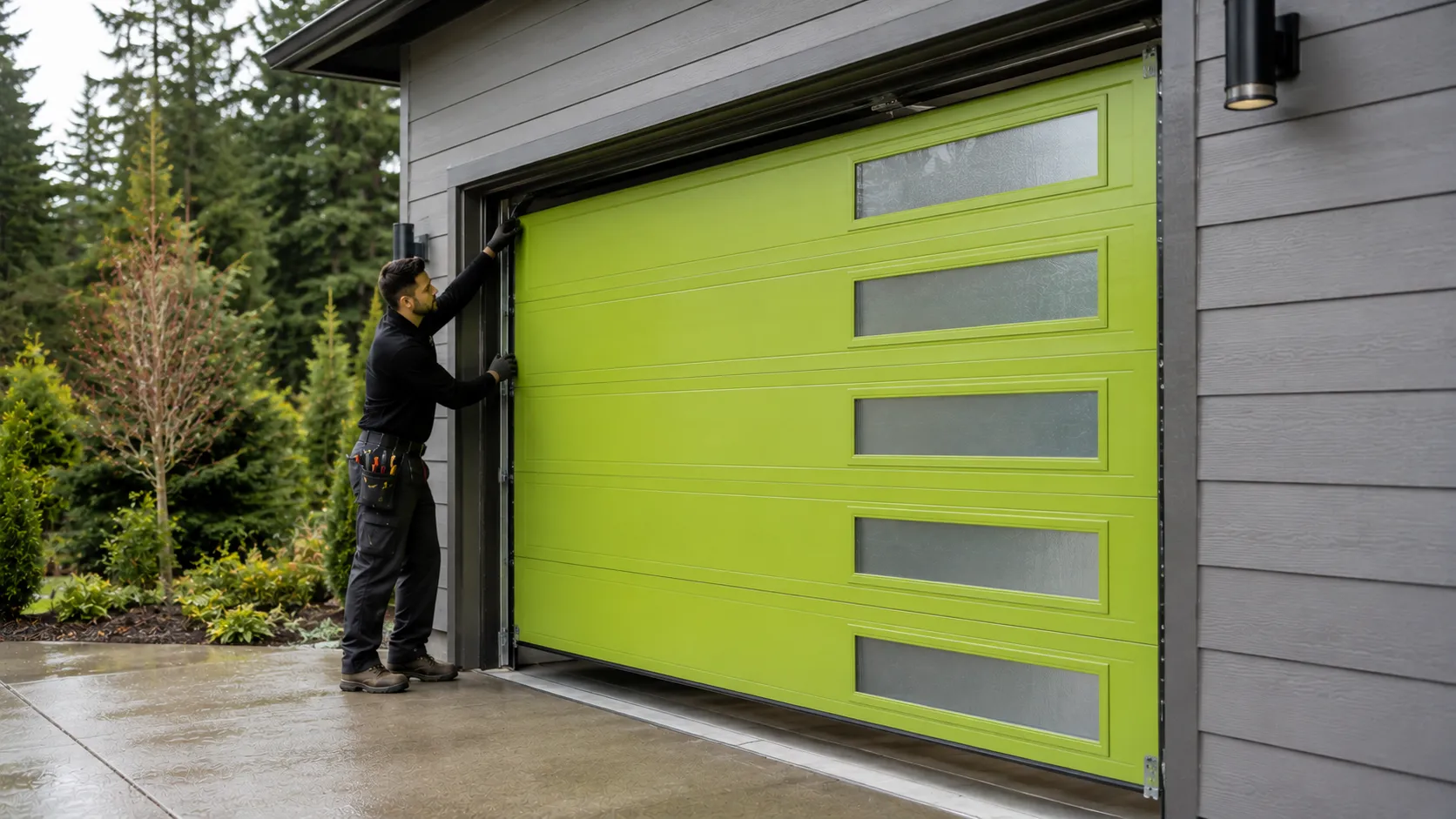
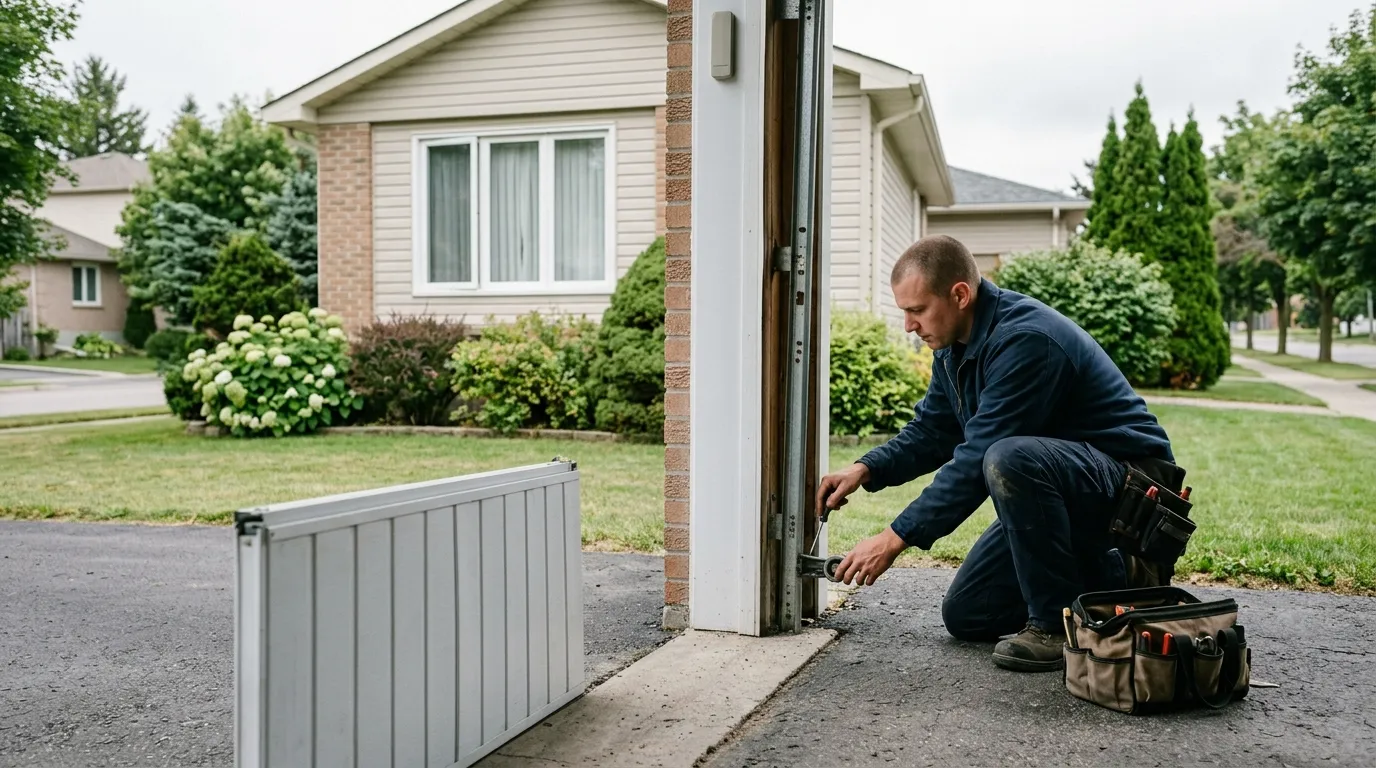
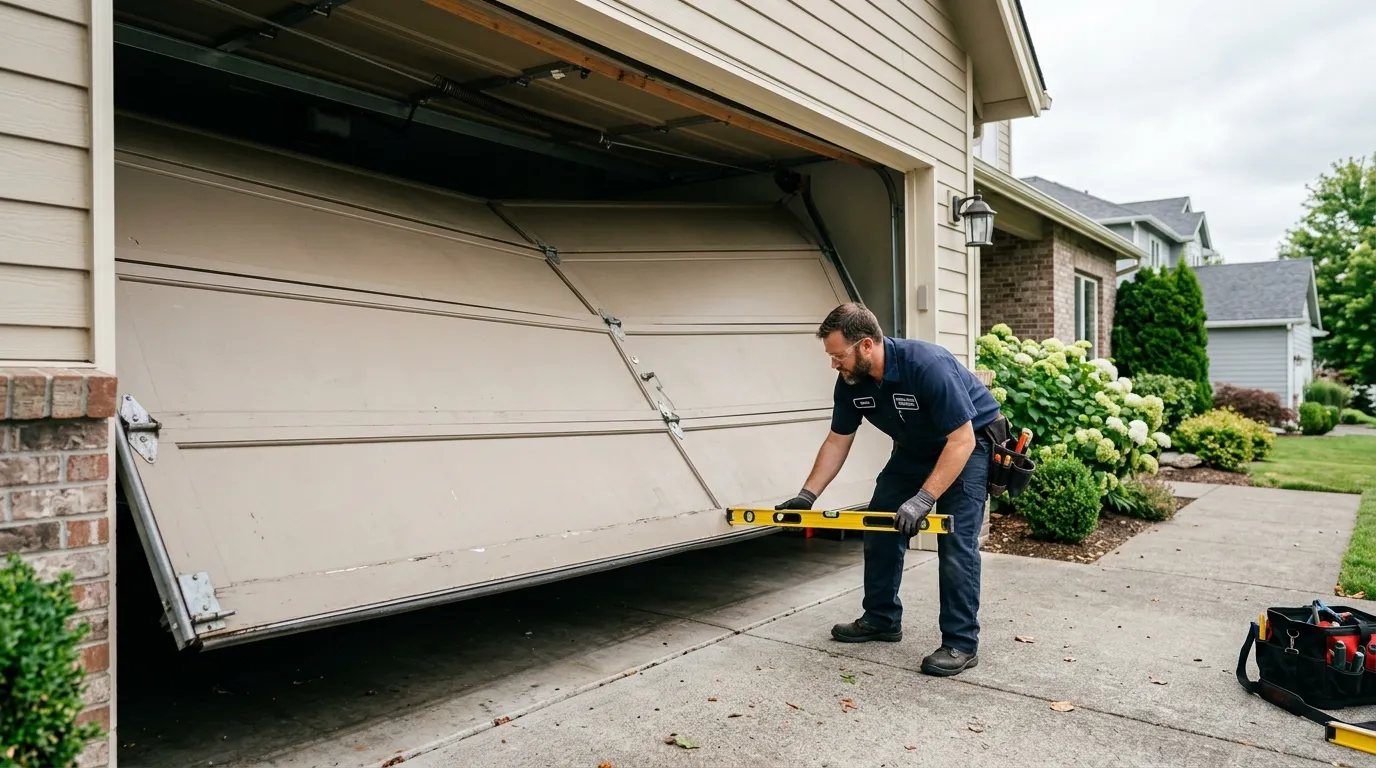
Call when the door won't open or close smoothly, when you hear a loud bang followed by the door refusing to move (that's almost always a broken spring), or when the opener runs but the door doesn't track straight. Those aren't wait-and-see problems - a door under uneven tension can jump the track or drop suddenly. We cover Hudson Oaks, Willow Park, Aledo, and the rest of the towns within about twenty miles of Weatherford, and parts for a 1966 door in Millsap are just as hard to find as one in Weatherford proper. That's the honest limitation: on some of the oldest doors in the area, matching hardware isn't always sitting on a shelf, and sourcing an exact replacement panel or spring size can take longer than the repair itself. In those cases we'll tell you straight whether it makes more sense to wait on a part or move to a full door replacement, rather than stringing along a repair that won't hold. If your door is under ten years old, most calls are quick - a sensor, a limit switch, a lubrication job. Past that age, plan on the conversation going a little further.